Monday, April 20, 2020

House Sparrows – Who Cares!

For today’s post I reproduce a beautifully written piece about the House Sparrow. The article first appeared in The Irish Times in March 2001. So insightful and relevant is the piece still, and so little has changed, that it could have been penned just yesterday. To break the text a little I thought to include my own photographs; and then I discovered I don’t have too many of Passer domesticus, the House Sparrow. How sad is that? 

The Sad Decline of the Street-wise Sparrow. Michael Viney - The Irish Times March 17, 2001. 

You'd swear the sparrows hadn't eaten for a month, the way they go at the nuts: the thrust of the neck, the roadhammer bill, a shudder of effort right down to the tail. Beside them, the goldfinches are positively dainty at table, not to mention far better dressed. 

That may not be fair. Granted, there were mornings in the snow when a half-dozen Technicolor goldfinches swinging on the feeder made a picture for a calendar, but a really close inspection of a cock house sparrow in spring finds a pleasing enough attire. This is when the white tips of its breast-feathers wear off, to uncover the rich black bib. A smart, dove-grey crown to the head, a crisp weave of chestnut and buff in the wings make up quite a distinctive logo for a little brown bird. 

People are beginning actually to look at the house sparrow, now that it's disappearing. Stories of its decline in Ireland's cities and suburbs are matched to "catastrophic" losses in London and Glasgow. Twenty-year declines are reported in much of western Europe, and even in North America, from Quebec down to Florida. One big study near Lake Constance in Germany found sparrows down by 23 per cent in the 1980s alone. 

House Sparrow 

Sparrows are such a diverse tribe, the evolutionary scientists' term of "adaptive radiation" might have been made for them. Our own house sparrow, Passer domesticus, is just one of 20 species spread across the world and itself has a dozen different races. Some of their names - P.d. niloticus, persicus, biblicus - hint at the ancient heartland where bird and man evolved together. 

In the fertile crescent of the Middle East, sparrows were seed-eaters, feeding on the grasses that the first farmers selected into cereals. As cultivation spread, and hunter-gatherers settled on the land, the sparrow kept them company, all the way, eventually, to Ireland one way and Siberia the other. No fewer than 14 of the world's 20 species now live happily alongside people and nest in holes in their buildings. 

In Ireland, P. domesticus probably had its hey-day in the early 19th century, when the population was highest, the towns had the most horses, and even the west of the island was rich in patches of oats and potato-ridge weed seeds. At the century's end, Richard Ussher found the sparrow "spread throughout Ireland to the remotest coasts, and delights in the congested districts where the numerous thatched cabins afford it comfortable homes". Ireland's sparrows shared in the decline that followed the replacement of the horse by the car and tractor. But recent decades have seen other trends working against them: the end of the west's small oatfields; of farmyard hens and ducks and their dishes of mashed potato and scatterings of grain; the mowing of grass for silage before it seeds; the ploughing-in of autumn grain stubbles, the use of herbicides to rid field margins of seeding weeds. 

Many of these changes wove together in the 1970s, which is when the wider decline of the house-sparrow began to take effect. In the New Atlas of Breeding Birds published in 1993, the number of empty circles in the west of Ireland and small-farm Scotland was quite striking. 

House Sparrow 

Currently, BirdWatch Ireland's countryside breeding bird survey finds the sparrow nesting in only 40 per cent of the squares under census. And in its regular garden bird survey, the sparrow has dropped four places in the past four years. Now Mary Toomey, of the Department of Zoology in Trinity College, Dublin, has taken on a special study of the Irish sparrow in its natural habitats. 

It's in the cities that its collapse seems most noticeable, and this invites its own speculations - cats, for example. The Mammal Society of the UK recently analysed the records of what was killed or captured, over five months, by 964 cats. Among their 14,000 prey items, which included weasels, frogs and bats, were 961 house sparrows. An earlier study, in an English village, found that cats accounted for almost a third of sparrow deaths in one year. 

But the impact of predators does not impress J. Denis Summers-Smith, the British engineer who has studied sparrows for 50 years, as an important explanation. Not even the undoubted increase in urban and suburban sparrowhawks seems to him to have much bearing on the "catastrophic" inner-city declines. 

Some conjecture that these declines have coincided with the introduction of lead-free petrol, with its special additives, or that the particles in diesel exhaust may block the sparrows' capillaries. But the picture of a sudden inner-city collapse could be misleading. The real stronghold for the sparrow has been the suburban garden, and the dispersal of surplus young from suburban nests may have masked a decline both in the city and the countryside. 

For Summers-Smith, the big pressure on Passer domesticus has to be food - not so much the fall-off in year-round seed supply as in the insect food needed by the sparrow nestlings for the first critical days of their lives. Perhaps, by helping to kill off the arthropods - the insects, spiders and crustaceans - traffic fumes are working to make cities unlivable for these once street-wise little birds. In this respect, he suggests, we should think of the sparrow as the modern equivalent of the miner's canary. 

House Sparrow

House Sparrow 

On our Mayo acre, at least, neither insects nor grass and weed seeds are any problem. Our little colony of a dozen or so sparrows built up quickly a few years ago, drawn by the winter nut-feeders, and will clearly be with us for the rest of our days. They have a special fondness for the thorn bush that leans above the septic tank and gather there for sessions of "social singing" on winter afternoons, a disyllabic Greek chorus drifting in the wind. 

Now, the chirruping is more scattered: a communication between partners. One lifelong pair are already well ensconced in the hole they used last year, under the ridge tiles of the porch; others find niches in the wood-shed. If I put up nest-boxes, tits and sparrows would compete for them and the sparrows, probably, would win. There is a critical size of hole that excludes them (32 mm), but who, in these changed days, would want to know that?

House Sparrow

==================

For the current state of play of the House Sparrow I recommend a read of The British Trust for Ornithology

Or maybe the story about The Most Common Bird in The World at Smithsonian US


Saturday, April 18, 2020

Back In Time

Three more weeks in captivity is the sentence. While we’re waiting for the starting pistol here’s an earlier post of Another Bird Blog from June 2017. The day promised a visit to the Bowland Hills, “England’s Answer to Tuscany”, about 20 miles away from the Flat Fylde coast where I live. 

With luck there will be a chance to revisit the hills in June 2020 for what is a highlight of any birding year. 

~~~~~~~~~~~~~~~~~~~~~~~~~~

I took lots of pictures up in Bowland this morning, almost 400, easily packed onto half of an SD card. I know there are some who refuse to abandon the traditional 35mm film photography, but give me digital photography, computers and Photoshop any old day.

It was a morning of waders again with a number of Snipe on show, plus Redshanks and Oystercatchers with young. I even managed a picture of the very shy Red Grouse. Other highlights of the morning included two Ring Ouzel, Turdus torquatus –“the mountain blackbird”, and at least one Cuckoo.

Click the pics for a closer look.

Ring Ouzel 

At this time of year Redshanks are always on the lookout for predators and will shout endless warnings from a prominent place advising their young to stay out of sight.

Redshank 

Redshank

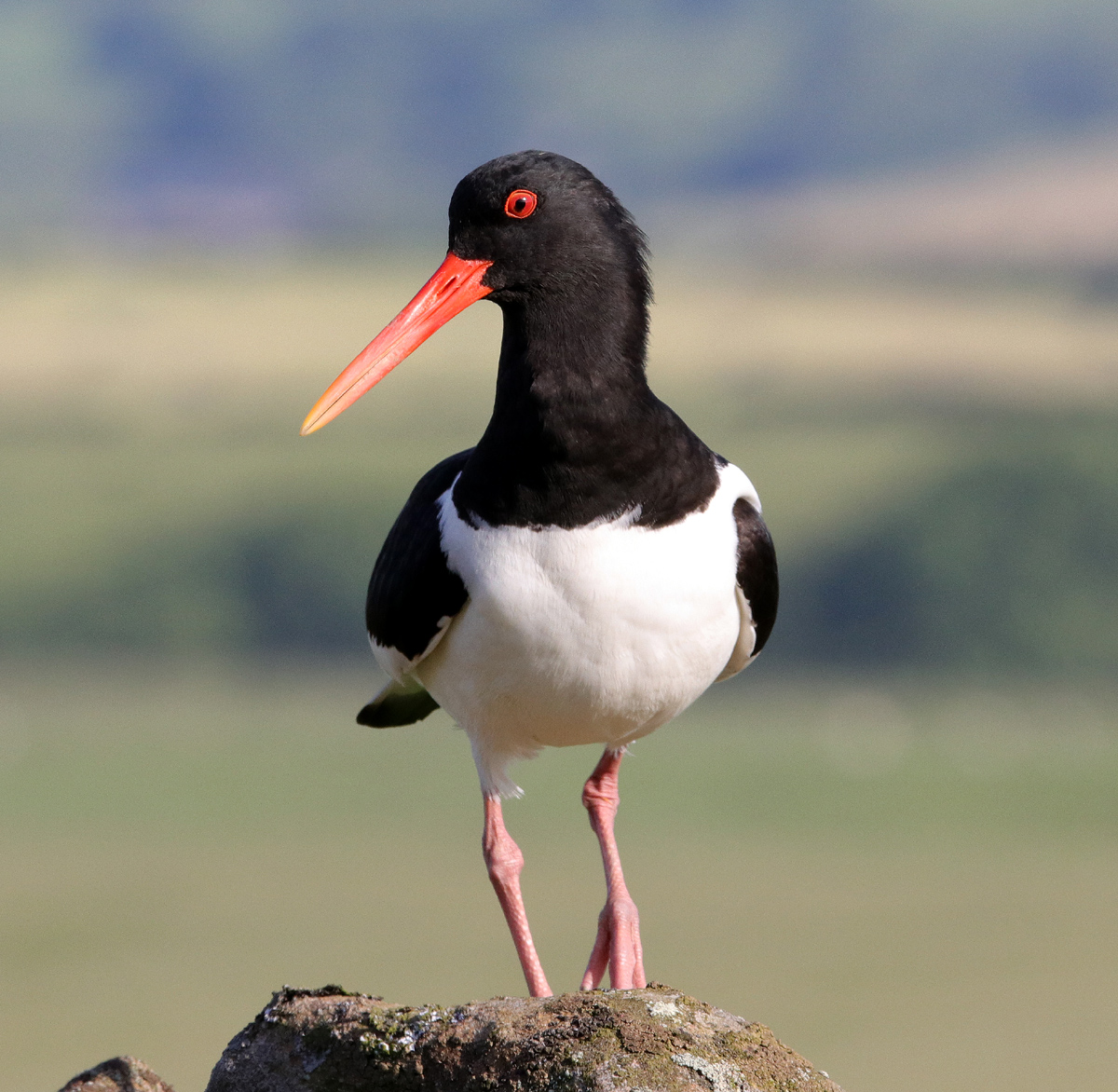
Oystercatchers do the same. It’s not that they like to pose for the camera, their parental duties are foremost in their reaction to the wound down window of a vehicle.

Oystercatcher 

Oystercatcher

Red Grouse 

The Red Grouse is an unmistakable bird - plump and round, with a gingery-red body as its name suggests. Found on upland heath, it is under threat from a nationwide, dramatic loss of these habitats.

Red Grouse

Snipe seemed especially active this morning whereby I saw 8/10 individuals in poses, behaviour or voice that suggested they also have young.

Snipe 

Snipe 

Snipe

Snipe 

Bowland 

Bowland 

A barely fledged Redshank  had quickly learnt about using dry stone walls as a parent looks on.

Redshank 

Redshank chick

Redshank

Pied Wagtails and Meadow Pipits are probably the two most common and conspicuous birds in these parts. Sadly, the Lapwing population has tumbled for many years.

Pied Wagtail 

Meadow Pipit 

 Lapwing

Bowland, Lancashire

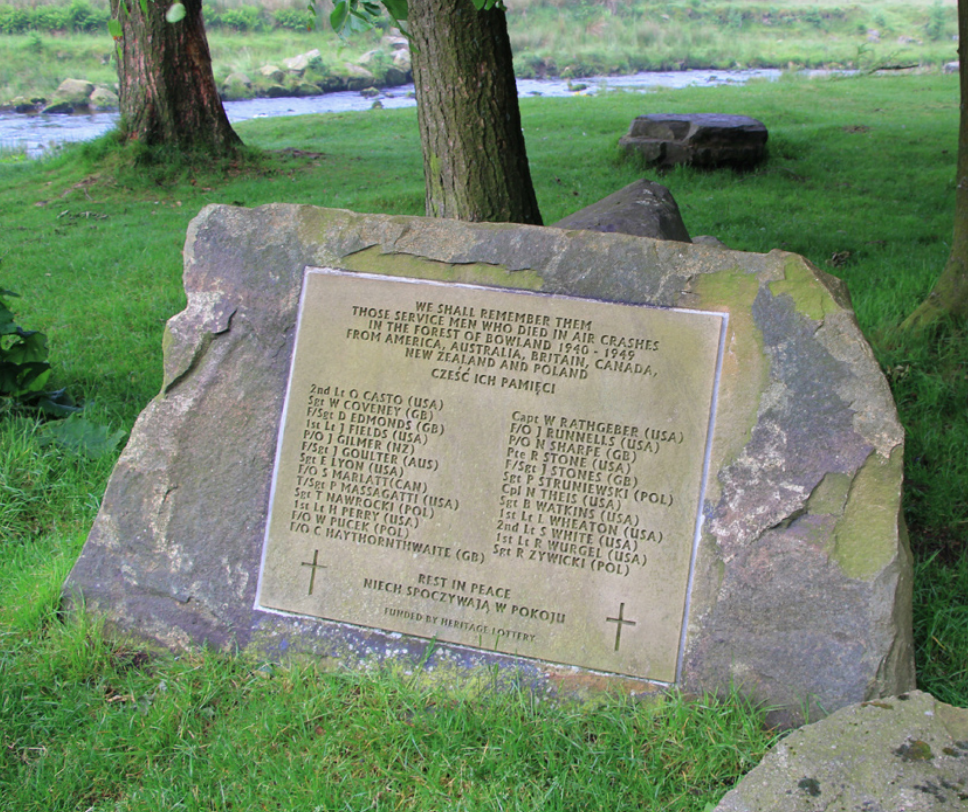
At Langden there's a memorial stone to airmen killed in the Second World War that makes for sombre reading at anytime.

War Memorial - Langden, Bowland 

That's all for today. Come back soon for more birding, photographs or ringing with Another Bird Blog.

~~~~~~~~~~~~~~~~~~~~~~~~~

April 2020. Update to that Red Grouse. 

Torching heather, popular with gamekeepers but bad for the environment, is now outlawed in several upland areas of northern England The controversial practice of setting heather-covered moorland on fire, carried out by gamekeepers to create more attractive habitats for grouse is now banned on more than 30 major tracts of land in northern England. 

Heather Burning - Getty images

"Three large landowners have confirmed that their tenants are no longer allowed to burn heather routinely. The ban is a blow to grouse shoots, which burn older heather to make way for younger, more nutritious plants for grouse to feed on, but environmental groups say the practice harms the environment. Research by the University of Leeds has found that burning grouse moors degrades peatland habitat, releases harmful altering gases, reduces biodiversity and increases flood risk 

The issue has been thrown into sharp relief by the coronavirus outbreak. Yorkshire Water and United Utilities have said that all burning on their land must now cease until further notice. 

The National Trust said: “We are keen to alleviate pressure on the emergency services, and are working with estate managers and tenants to ensure any burning is stopped immediately.” The move follows requests from emergency services and local councils, which fear that burning increases the risk of wildfires, and that fumes might affect people suffering from Covid-19."

Linking this post to Eileens Blog and Anni's Blog in North America. Give them a visit. 


Wednesday, April 15, 2020

Garden Top Ten

Thanks to the Wuhan Flu and house arrest it seems we are all to become garden birdwatchers until further notice. 

Just in time then to read of the latest results from the RSPB's Big Garden Birdwatch, an event held over the weekend of 25-27 January 2020 when nearly half a million people counted almost eight million birds. It made this year’s Birdwatch one of the biggest ever. 

The RSPB even produced a Top Ten, a list that depending upon a particular location may not equate to all gardens but represents a combined average result from the whole of England, Scotland, Ireland and Wales. 

Here they are in one to ten order; a list to bring tears to eyes of WhatsApp “bird news” groups. Not a single “scarce or rare” among them. In the archives of Another Bird Blog I found a picture for each of the species, useful ID pointers for those who have little or no time for common birds. 

The figure in brackets is a guesstimate of the top ten in my own garden for an average January day. In our garden, Magpie is replaced by Dunnock, a much nicer prospect. Magpies aren’t around because I chase them off as soon as they appear:

1. House Sparrow (10)
2. Starling (8)
3. Blue Tit (5)
4. Woodpigeon (2)
5. Blackbird (3)
6. Goldfinch (1)
7. Great Tit (4)
8. Robin (6)
9. Long-tailed Tit (9)
10. Magpie (0)
10. Dunnock

House Sparrow 

Starling 

Blue Tit 

Woodpigeon

Blackbird

Goldfinch 

Great Tit 

Robin

Long-tailed Tit

Dunnock

The RSPB Top Ten of the changes little from 2019, with the top three birds the same as last year. Again, the Number One spot is taken by the House Sparrow, making it first for seventeen years running. Meanwhile the House Sparrow is nowadays an uncommon visitor to our ample sized semi-rural garden. Here the House Sparrow struggles to even hit the charts, despite the RSPB report suggesting that their numbers appear to have increased by 10% in the last ten years. 

The RSPB detect movement at fourth and fifth, with the Woodpigeon moving up to four and, last year’s number four the Blackbird falling to five. This is not surprising given the highly adaptive pigeon’s abundance here in Stalmine that gives the species an easy runner-up place in our garden list. This commonality is explained by a nearby mix of farmland, many trees, thick hedgerows, tolerant residents and few shooters. 

Small birds like Long-tailed Tits (up by 14% on 2019), Wrens (up 13%) and Coal Tits (up 10%) counted well during a mild, wet winter that came with very few frosts and little snow. The 14% for Long-tailed Tits also accounts for it remaining high on our local list as a past breeding species in the berberis bush; and a regular visitor likely to nest again. 

The report showed that Chaffinch dropped from the top ten down to number 11. This placing reflects very recent news that this once abundant farmland bird is the latest species in trouble through agricultural changes and over-building on green land and woodland edge. Sadly the Chaffinch is no longer a regular in our own garden. 

Losers out this time included Song Thrush way down at 20th in 2020, seen in just 9% of all gardens. Compare this to earlier Big Garden Birdwatches of 1979 -2009 when the Song Thrush made a top ten appearance in every year. In our garden, the once common Song Thrush is both "scarce and rare".  

It's a surprise the Goldfinch doesn’t even make the RSPB top five when here in Stalmine it is far and away the most common garden bird at any time of year. Perhaps the Goldfinch is not yet a city bird where many of the Big Garden Birdwatchers reside? 

Greenfinch is another big loser over the span of the Big Garden Birdwatch, a reflection of a major nationwide decline in its population. It came in at 18th and was seen in just 14% of gardens, this itself a worrying drop of 8% on 2019. We have a pair of Greenfinches in the garden so we count ourselves rather lucky in many ways. 

And the cherry blossom smells just wonderful. 

 Cherry Blossom

Stalmine

At least the good weather means we don’t sit in in the house and watch TV.  I’m told there are still people who pay a TV Licence fee for the privilege of having their intelligence insulted!   

Meanwhile, the Government is in a “damned if they do, damned if they don’t” situation.  A relaxation of the lockdown advice will be pounced on by TV and newspaper media and used to whip up even more public hysteria.  The effect this media-generated madness is having on an already browbeaten population has been leapt upon as an excuse for a monumental power grab by the illiberal left, forever eager to bring down an elected Government.  

Back soon with Another Bird Blog and tales of The Great Escape.


Monday, April 13, 2020

Keep Your Distance

Birds are well practised in social distancing; in fact they are experts. When was the last time if ever you were closer than two metres to a wild bird? The long lens on a modern digital SLR camera can play tricks with our understanding of a bird’s tolerance of being too close for comfort; many a togger has fallen foul of the cardinal rule of “keep your distance”. 

Bird Photographers

There’s a good reason birds stay away from man. Man is the apex predator, top of the food chain. Ever since Neanderthals roamed the earth with stone-tipped spears, birds have been there for the taking once nuts, roots and leaves fell out of fashion. Stone-age man could hunt and kill anything they wanted to eat. From small birds up to the largest mammals. Their world was but a meaty oyster.  

Birds became a source of food, literally “fair game” in every part of the world. Birds were used as clothing adornments, jewellery, status symbols, or pets in a cage to sing for their supper. Birds are both “sport” and a gourmet meal to the present day shooting fraternity - geese, ducks, grouse, snipe, woodcock and even gold-spangled plovers to be enjoyed with a glass of the finest chateau. You name it, they shoot it.

Nestlings of wild falcons, hawks, eagles and owls are partially tamed and manipulated to become man’s slaves, for amusement or to hunt other lesser animals for their only master. But as the falconer may discover later, when the beast slips the jesses and flies far away, “you can take a bird from the wild, but you can’t take the wild from a bird”. 

Golden Eagle

Small songbirds can be "habituated" to the presence of humans. They may not immediately fly away when a human appears but they are still wild. The human becomes a part of the background of the bird's environment and for now they accept the close proximity of a human as normal and non-threatening. 

In North America a number of common songbirds become so habituated with close human interaction that they can be eventually "trained" to take food from the hand at an arm’s length. Some of the "braver" birds accustomed to the presence of humans include Tufted Titmouse, Chickadees, Ruby-throated Hummingbird, Nuthatches and House Sparrows. 


Red-breasted Nuthatch

Chickadee

N.B. Trying this on with a street-wise UK House Sparrow will get you absolutely nowhere. 

Here in the UK the crow family of Ravens, Carrion Crows, Jackdaws and Jays are well known for their propensity to forget social distancing. Blackbirds, Robins, the tit family and European Nuthatches will occasionally join in the fun and leave aside the rules of engagement. I once lost a shiny biro to an inquisitive Magpie when testing the theory that the crow family are entranced by man’s glossy baubles, if not necessarily by man’s proximal charms.

Great Tit

Man with Magpie - Real Fix Magazine

There’s not a lot we humans can teach birds about social distancing but maybe we can at least respect their reasons for mostly wishing to be distant from us. We must always remember that there is no such thing as a naturally tame wild bird. We are their greatest enemy. 
    
"Birds are the most popular group in the animal kingdom. We feed them and tame them and think we know them. And yet they inhabit a world which is really rather mysterious."  David Attenborough.

Here in Lockdown Britain Sue and I are staying well and sticking to the rules to avoid the Wuhan virus.  But with the best spell of weather for six months or more, many of the natives are getting restless, setting off for the seaside, heading for the hills or lying in the park.  

Grey Squirrel

We’re content to stay at home for now if even the garden birds are somewhat limited. Meanwhile a local squirrel tries to lift the lid and find out what is really in there.


Friday, April 10, 2020

Back To The Future

Get used to it you birders. This is the dystopian, authoritarian future. The current lockdown is just a dress rehearsal for the real thing of the not too distant future. 

The Department for Transport has launched a consultation paper which calls for a major move from cars into cycling, walking and buses, but has told few people about it. 

The paper, Decarbonising Transport: Setting the Challenge, crept out on March 26. Citing the Government’s 2050 net-zero greenhouse-gas emissions target, Transport Secretary Grant Shapps writes of a vision where - “Public transport and active travel will be the natural first choice for our daily activities. We will use our cars less and be able to rely on a convenient, cost-effective and coherent public transport network.” 

He adds: “From motorcycles to HGVs, all road vehicles will be zero emission and technological advances . . . will change the way vehicles are used.” 

How will the reduction in private transport be achieved? By making private cars too expensive for ordinary people? Rationing cars to one per family? Rationing mileage  by road charging? Or maybe we will end up with scenes observed this week, where the authorities allow car travel for specific purposes only? Or more worryingly, cars for elite sections of society only - politicians by any chance? 

Animal Farm

Fortunately, happier thoughts are to be found in Another Bird Blog archives from December 2014 when I asked the question “Do Birds Smell?”.

==========

It’s a question I asked myself a number of years ago when noting how long it took for birds to discover new sources of food, in particular the introduction of bird feeders where none had been used previously. 

Birds were always thought to have a very poor sense of smell. But most vultures and many scavenging seabirds locate their food by smell. Any birder who has been on a pelagic trip to see seabirds up close will be familiar with the practice of chucking overboard buckets of “chum” or “rubby-dubby”, to lure shearwaters and petrels close to the boat. 

Manx Shearwater

Wilson's Storm Petrel

Scientists believe that other birds, e.g. homing pigeons, may use familiar odours in finding their way home or use their sense of smell during migratory journeys. Think about the various odours given off to overflying birds by different places, e.g. pine forest or ancient deciduous woodland, saline or fresh water, the urban jungle or the countryside. 

Egyptian Vulture 

A recent Dutch study determined that Great Tits found and located apple trees with winter moth infestations and big concentrations of caterpillar larvae by smell rather than sight. Tit species eat large numbers of insect larvae particularly during their breeding seasons when they feed them to their young, timing their breeding to do so. Trees benefit from the protection offered by birds removing larvae that would otherwise go on to eat the leaves and perhaps impact on tree growth and productivity 

Great Tit 

The Dutch experiments were designed to remove other possible ways in which the Great Tits might detect the winter moth larvae. The researchers removed the caterpillars, removed leaves with holes and even took away signs of ‘caterpillar poo’, ensuring no visual clues were left for the birds to locate the infested trees. Despite these measures the Great Tits repeatedly found the trees with larvae infestations. 

The results were clear, even when they couldn’t see the trees, the Great Tits homed in on trees with winter moth infestations when they could smell them. The researchers believe the trees gave off chemicals which birds can detect by smell to alert them to infestation. It has long been known that many plants attract insects using smells and benefit from the relationships as a result, but this is the first time they have been shown to attract birds in the same way. 

More research is needed to determine which chemicals are involved but infested trees were found to release more of a chemical responsible for the “green” smell of apples. 

Most bird feeders use metal/plastic tubes or wire mesh to make the food highly visible to birds and we naturally assume that birds start to use our bird feeders because they locate food via their keen eyesight. My new niger seed feeders arrived today, replacements for ones recently stolen from a ringing site. At first glance the design looks improbable and unlikely to work as the feeding holes are tiny. When the stainless steel cylinder is filled with niger, the seed is virtually invisible with just the tiniest point of an individual seed poking through a hole. 

Bird Feeders 

Nevertheless I experimented with this design of feeder a number of years ago and found them to be highly successful in attracting Goldfinches, Siskins and Lesser Redpolls very quickly and I attributed some of this to the birds’ ability to smell the seed. 

Goldfinches 

Here’s an experiment anyone can try at home. Buy a sealed bag of niger seed, open the bag and stick your nose in it. Then inhale and enjoy the sweet, oily, nutty fragrance which brings in those Goldfinches 

There’s is no doubt in my mind that birds and in particular Goldfinches have well developed olfactory senses, probably as good as our own. 

Now you must excuse me. From the kitchen I detect the unmistakable aroma of a tandoori chicken sizzling on the grill. 

Tandoori Chicken

I'm ready for a bite to eat. Back soon with more tasty morsels from the past.

Linking today with Anni's Blog and Eileen's Saturday Blog.

Related Posts with Thumbnails