Tuesday, April 24, 2012

Saved By A Goldfinch And Seven Whistles

In twenty five years of birding and ringing this spring has been possibly the quietest I’ve experienced, with both a lack of numbers and a shortage of species. Birders are good at theorising or coming up with excuses as to why birds don’t do as we would like, but my own humble explanation for the season’s dull migration is the constant northerly winds and cool weather which has blighted the whole of April.

This morning I went out to the moss hoping for a change of luck and stuck a couple of nets up whilst wandering about. Explorations through and around the ringing site generated 7 or 8 Willow Warblers, a single Blackcap, one singing Whitethroat, plus a small number of Goldfinches loyal to the feeders. 

The ringing total proved pitiful once again with just 4 Goldfinch and a single Willow Warbler caught. This left Goldfinch as by far the most numerous capture for April with 29 individuals with other species lagging far behind. 

 Willow Warbler

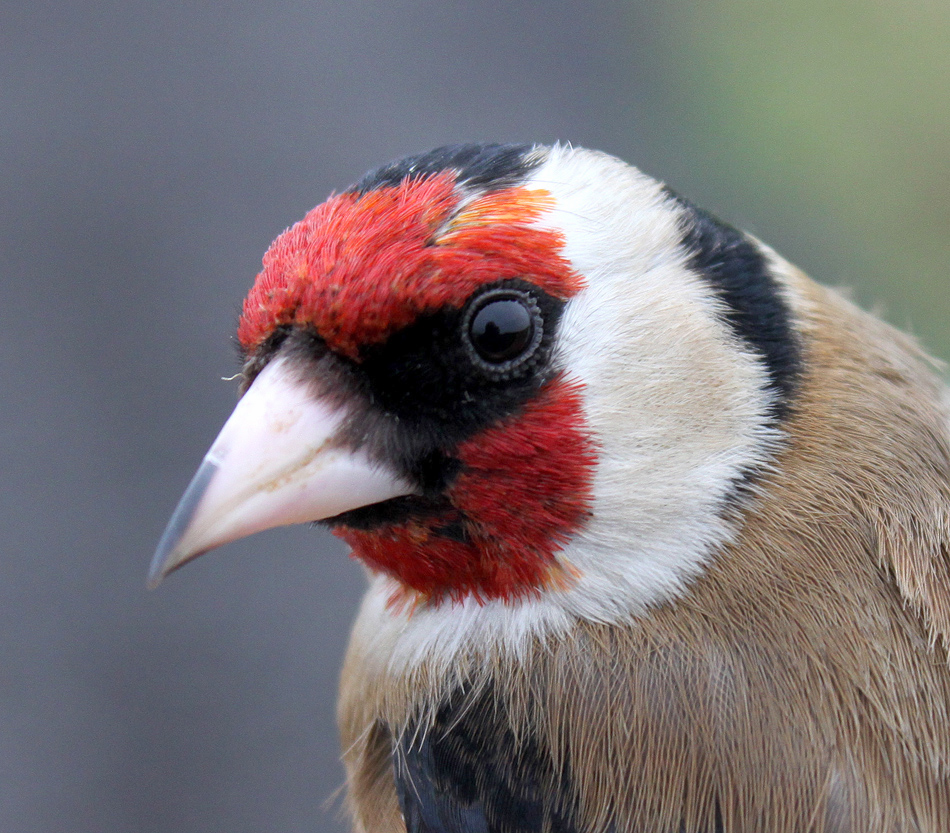
Goldfinch

Birding was similarly quiet, the highlight being 3 Whimbrel feeding in the grassy field beyond the ringing site. In some areas of the UK the Whimbrel is known as the Seven Whistler due to its distinctive tittering call, often uttered in flight.

Whimbrel
Other birds this morning: Reed Bunting, 2 Corn Bunting, 4 Linnet, 1 Buzzard, 1 Kestrel and Little Owl on the barn roof again as I arrived on site. Soon after first light the owl disappears into the roof space of the barn to somewhere meet up with a partner.

Little Owl

Sunday, April 22, 2012

The Pilling Way

Another cool, cloudy start saw me at Fluke Hall earlier than most, with just one car in the doggy walkers starting grid. The brambly hedgerow there just behind the sea wall is the best place to find the first Whitethroat, this morning’s bird obliging with a blast of scratchy song the moment the car door opened. 

Whitethroat

I set off towards Ridge Farm, and then negotiated the Pilling Puzzle, hoping for other bits and bobs along the way which heads back to the sea wall. I kept a wary eye on the menacing sky which threatened an April shower or two as I logged 4 singing Skylark, 5 Swallows dashing east, a couple of Linnets and a field with 40+ Woodpigeon and 2 Stock Dove. A Collared Dove obliged by staying on the gate post, but this was to be my best photo opportunity of the morning, hence the filler landscapes and peas on a drum later in the post. 

Collared Dove

Pilling Puzzle

Pilling Sky

Back in Fluke Hall wood I logged my first Blackcap of the year, singing as tiny Blackcaps do at a volume sufficient to be heard many, many metres away. Also here in the shelter of the woodland, 2 Willow Warblers and a Chiffchaff. 

Along Backsands Lane a roadside Kestrel carrying prey appeared to be hurrying towards Damside where a pair nest most years, and as I stopped to watch the Kestrel I noted a pair of Redshanks together in the wet field. 

At the car park I broke off birding to admire an old motor vehicle. In some ways out-in-the-sticks Pilling is a tad out of date, stuck in its ways even, but not when it comes to money. The owner of this Austin Seven pick-up offered to sell me the vehicle for £10,000. I told him I could buy a good Canon lens with ten grand, but he just gave me an old fashioned look. 

Pilling Transport

 It was a great morning to be out, even if I wasn’t seeing many birds along the way to Pilling Water: 1 Grey Heron, 1 Little Egret, 2 Tufted Duck, 2 Little Grebe, 2 Meadow Pipit and 8 Skylark. At Pilling Water I stopped to count the geese as there looked more than of late and came up with 600+ Pink-footed Goose and 1 Brent Goose. Looks like there’s been an influx of geese from Norfolk where the majority of the wintering Brent Geese belong to the Dark-bellied form bernicla. The geese were distant, more so when a jogger came along the sea wall behind me to spook them further away. 

 Brent Goose with Pink-footed Goose

Not much else along here, 2 Teal and a Shoveler on the wildfowler’s pools, more Skylarks and a flock of 45 Golden Plover, attacked at one point by a Peregrine which flew off when at first it didn’t succeed. 

 Golden Plover and Lapwing

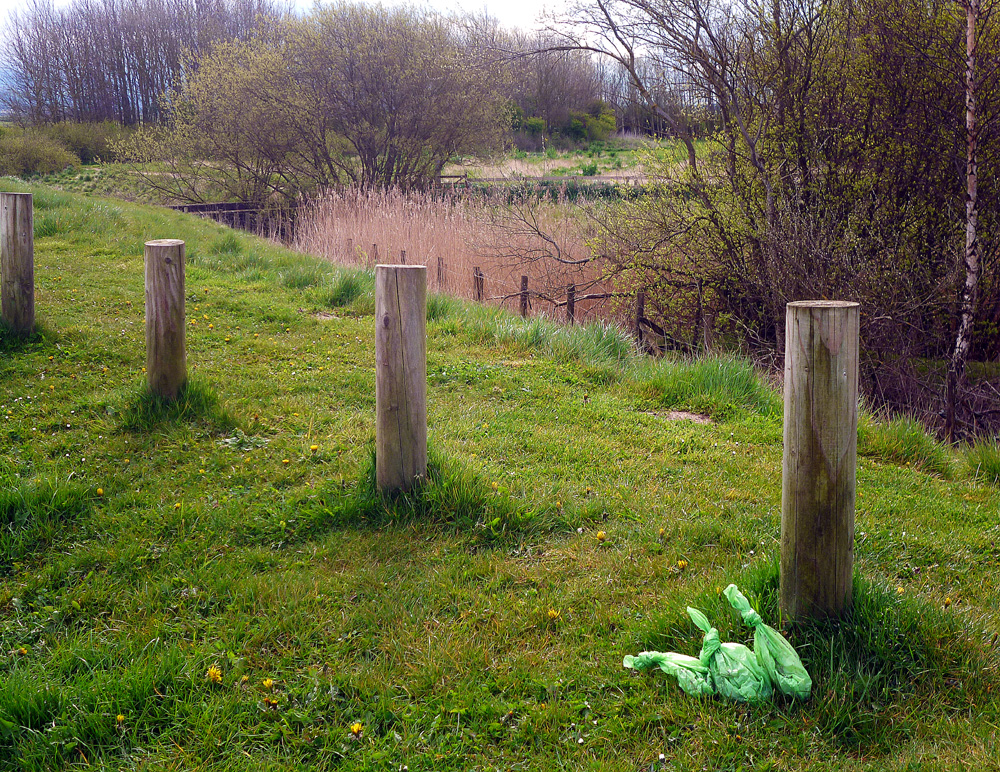
Back at the car park I took the picture below. I am a dog lover, grew up with dogs and have the scars to prove it. Nowadays some dog owners are extremely selfish and inconsiderate to the extent that the latest fashion is to discard bags of dog shit in public places where they expect volunteers or poorly paid public servants to pick it up instead of the owners taking it back home where it belongs. I’ll bet they were visitors to a local caravan park or incomers – Pilling People simply don’t do that. 

Litter Louts

Saturday, April 21, 2012

Mostly Linnet and Swallow

With more cool westerly winds this morning’s birding proved to be another low key affair, the only noticeable movement at Pilling being an influx of Linnets along the shore, a single White Wagtail, and Swallows heading out over the marsh. There was also the continued push north of Meadow Pipits, with a marked trickle of birds heading off over the bay towards Heysham. The latter species has been evident on many mornings since early March and must surely be near the end of spring passage. Swallows are now on overhead wires around many farm buildings, making it harder to separate out the local feeding birds from the ones heading determinedly north. 


 Linnet

The Wheatear traps didn’t work this morning, with blame cast mainly upon the meal worms which struggled to find a good reason to wriggle around in the cold conditions. Two bright sparks hung around for a while, but perhaps as street-wise adults the netting of the traps may have deterred them from sampling the bait. I gave up trying to catch them and settled down to attempt pictures instead; even now they weren’t for coming too close. 

 Wheatear

Wheatear

I stopped near the village for a few shots of a lonely Lapwing feeding amongst the dandelions. There are a number of Lapwings between Lane Ends and Fluke Hall, mainly on the freshly ploughed ex-stubble field, where the Lapwings may stand a chance of breeding, subject to the attentions of the Carrion Crows, local Foxes and Hi-Fly tractors. 

Lapwing

 Lapwing

 Lapwing

 Lapwing

 Lapwing

 Lapwing

It’s a marginal forecast for tomorrow but I’m sure there will be a fresh post on Another Bird Blog – stay tuned. 

Friday, April 20, 2012

Slowly Does It With A Sad Song

Here in coastal Lancashire we are fortunate to have so many good birding spots, the estuarine coast and marshes bordering internationally important Morecambe Bay, the hills just inland which encompass Bowland where Hen Harriers occasionally breed, or the extensive pastures of the Fylde plain where farmland birds like Corn Buntings and Yellowhammers might still be found.

This morning I felt torn between coastal birding or checking out our ringing site at Rawcliffe Moss for new arrivals; as the car made its way from home to the end of the avenue the steering wheel spun left towards Hambleton and the inland mosses; it’s so good to have the many options for a spot of birding.

Spring has been slow to arrive this year but on 20th April I hoped for the odd Whitethroat or Blackcap to add to the few Willow Warblers and Chiffchaff caught so far. It didn’t happen again with just 12 captures from my session, 2 Willow Warbler, 7 Goldfinch, 2 Chaffinch and 1 Dunnock, without sight or sound of other warblers.

At least 6 Willow Warblers were in song, my two birds a recapture from 2011 plus a newly arrived female. While other species seem in short supply the tiny Willow Warblers seem to have grabbed any opportunity to head north.

 Willow Warbler

 Dunnock

Goldfinch
 
There was very little on the move this morning, a handful of Meadow Pipits, a single Lesser Redpoll and a single Swallow heading north. Other birds were the usual locals of 1 Little Owl, 3 Skylark, 12 Goldfinch, 8 Chaffinch, 2 Reed Bunting, 4 Linnet, 2 Corn Bunting, 2 Fieldfare still, 2 Kestrel and 2 Buzzard. I took some time out to take pictures of a Corn Bunting singing its unhurried, melancholy “bunch of keys” song. Take a listen because the sound is becoming rather scarce in the UK.

 Corn Bunting

 Corn Bunting

 Corn Bunting


The Corn Bunting is a UK Biodiversity Action Plan priority species. It is a farmland specialist, and has suffered one of the steepest population declines in recent decades – c. 90 % since 1970. Although the precise factors are unclear, the loss of extensive mixed farming appears key to the decline with loss of winter food a probable cause of the population decline. The BTO`s winter Corn Bunting survey as long ago as 1992/93 showed that weedy stubble fields were by far the most important feeding habitat during the winter. The area of winter stubbles is greatly reduced in recent decades due to the switch from spring-sown to autumn-sown cereals, the decline in mixed farming and the disappearance of undersowing. In addition, increased herbicide and fertiliser use has reduced the abundance of wildflower seeds and intensification of farming practices with increased use of pesticides and fertilisers has reduced the availability of insects for any chicks the Corn Buntings can produce. 

Out Rawcliffe is now one of the few local areas where Corn Buntings still occur, but even here their numbers are quite low with just 2 or 3 pairs on “our” farm.

Wednesday, April 18, 2012

Spring Swallows, Year Round Peregrine

 Yesterday was a day off birding but grandparenting instead, later in the day joining all the other Nans and Granddads waiting outside the school gates. Frank said they had negotiated time off for good behaviour and were off to warm and sunny Portugal this week where they hope to see White-rumped Swift and Black-shouldered Kite – Good luck Frank. 

In this morning’s cold north-easterly wind the nearest I could get to those two exotica was a single Peregrine and 12 more spring Swallows heading north in ones and twos. I’d gone to Pilling equipped with spring traps and meal worms, hoping for more Wheatears but I saw none in place of those here a few days ago. From Lane Ends to Pilling Water and in pretty cool unspring like weather I counted 2 Willow Warbler, 1 Chiffchaff, 1 Kestrel, 2 Little Grebe, 70 Shelduck, 300 Pink-footed Geese, 12 Greylag Goose, 3 Little Egret, 4 Linnet and 6 Meadow Pipit.

I was watching 8 or 9 Skylarks, sorting out territories near Fluke Hall when the Peregrine sailed over but heading out to the marsh. The Lapwings and Oystercatchers on the stubble field didn’t seem to react; neither did the Skylarks, perhaps because the Peregrine wasn’t in true hunting mode but as it passed by glanced over at me sat on the stile by the gatepost. 

 Peregrine

 Peregrine

 Peregrine
 
The Skylarks did a lot of chasing each other about with odd ones rising up to sing while others stayed on the ground. With the grassy areas yet to sprout any real growth it’s very unlikely the Skylarks have started nest building just yet. 

Skylark

Skylark Nest

Along Fluke Hall Lane and Backsands Lane I counted 16 Lapwings and 10 Oystercatchers but sad to report that I saw more Carrion Crows than I did waders, the corvids outnumbering the Lapwings and Oystercatchers by two to one. Maybe one or two pairs of Lapwings and Oystercatchers will succeed but the odds are clearly stacked against them. Redshank numbers are similarly low with one or two pairs displaying out on the marsh but none on the inner fields. 

Redshank

Nothing much else to report apart from a Robin carrying food near Fluke Hall where I saw 50+ Woodpigeon still flocking, 4 Stock Dove and 3 singleton Swallows heading east. 

Monday, April 16, 2012

A Couple Of Wheats

Like other migrants the Wheatears have been thin on the ground so far this year, and before today the most I’d seen together was a trio just a couple of weeks ago, before the northerly winds set in. I doubled that count today when I found 6 along the sea wall at Pilling. 

Wheatear

The Wheatears gave me the run around for a while but eventually two of them succumbed to the temptation of meal worms. 

Wheatear
Wheatear

Wheatear

Both birds were probably Oenanthe oenanthe leucorhoa, one a rather chunky bird with a wing length of 106mm, the smaller bird a wing of 102mm, the latter a little in the overlap range. Both birds were quite bright with underparts a fairly extensive buff cinnamon, bearing in mind that oenanthe is very variable with the darkest birds similar to a pale leucorhoa. 

As I waited for the Wheatears to surrender the birding yielded 4 Swallow, 1 Kestrel, 1 Buzzard, 300 Pink-footed Geese, 3 Willow Warbler, 1 Chifchaff, 1 Reed Bunting, 6 Teal, 90 Golden Plover, 1 Greenfinch, 4 Linnet. 

Swallow

The forecast for the week ahead is a mixed bag of everything that a UK April brings - showers, rain, sun and wind. Just the stuff to drop some migrants from up high – here’s hoping.

Sunday, April 15, 2012

Spring Saga

After being out of action for a few days, I was keen to get out early, so despite the frost I set out to Rawcliffe Moss at 6 a.m. with a few mist nets and a good deal of anticipation. 

It’s an unusual sort of spring when out on the moss I can hear Willow Warbler, Chiffchaff and Fieldfare all in song at the same time, but that’s what happened early on. As I put a couple of nets up 3 Willow Warblers and a Chiffchaff sang nearby with further along the farm track a gang of Fieldfares feeding in a ploughed field. Every so often the Fieldfares would fly into tree tops whereupon at least one broke into song. This went on for a while and it was only when I left a couple of hours later that I could see at least 20 Fieldfares feeding in the tilled soil. It’s getting pretty late for Fieldfares to be still around but no doubt they are delaying heading off to Scandinavia until they get a southerly wind to help them along the way, the same wind we need to bring more summer migrants here. 

That’s all a way of explaining how a quiet session resulted in just 10 birds, 1 Chiffchaff and 9 Goldfinch – thank goodness for the Niger feeders. 

 Chiffchaff

Goldfinch

 Fieldfare

It’s still a little early in the month for warblers like Whitethroat, Garden Warbler or Sedge Warbler to arrive this far north in any numbers. Even the female Willow Warblers appear absent yet, arriving as they do some days after the male vanguard. 

I couldn’t detect much migration this morning, the most noticeable arrivals being Goldfinches, which may or may not have been fresh migrants as there are always a number around. I noted a single Lesser Redpoll plus at least 4 Siskin over during the morning, with 4 Swallow sightings of singletons heading north into a strengthening breeze. An unusual record for here was 2 Black-tailed Godwits heading north about 10 a.m. but they had probably lifted off from the nearby River Wyre. 

 The remainder of the morning’s sightings were locals: 12 Chaffinch, 3 Buzzard, 2 Kestrel, 2 Song Thrush, 3 Corn Bunting, 2 Yellowhammer, 4 Curlew, 3 Skylark, 4 Lapwing, 4 Linnet, 2 Pied Wagtail, 1 Stoat.

 Chaffinch
Related Posts with Thumbnails