Friday, August 5, 2022

Martin News

We received information about the French ringed Sand Martin 8911708 Paris we caught at the Cockerham colony on 4 June 2022, the martin identified then as a breeding male ( 4 ). 

4 June 2022

Paris 8911708

Adult Sand Martin

At the time we assumed it had been ringed along the Atlantic coast of France but a detail that surprised us was not the place of ringing, Chenac-Saint-Seurin-d'Uzet, Charente-Maritime, but rather, the early date of the capture as 17 July 2021.  At that time it was a juvenile of the year 2021 so must have left its place of birth quite early before flying over the English Channel and then to South West France in the early part of July. 

Sand Martin 8911708
 
The BTO Migration Atlas tells us that young Sand Martins continue to roost in their birth tunnels or adjacent ones for several weeks before their gradual dispersal to other roosts and other colonies during their familiarisation period. This is a time of life that helps their return in the following year when they choose a place in which to breed, a location that is usually close to their place of birth. 

The summer of 2021 was an especially poor one of rain, below average temperatures and lack of food when the Cockerham colony, perhaps along with others colonies, appeared to abandon their nests early. We have no way of knowing for sure if the wet and cold summer contributed to the early capture of 8911708 so early in July 2021 but it almost certainly played a part. 

Juvenile Sand Martin
 
Duration: 322 days Distance: 951 km Direction: 352deg (N). 

The week has not been helpful to ringing with strong winds on most days. Saturday and all of next week are looking much more helpful. 

And the week after next will be our last visit to the Sand Martins before they all fly south again. Hopefully we can increase our total of 160 captures for 2022 and gather more information about the fascinating lifestyle of this species.

Thanks are due to the Parry Family for allowing continued access to the site and for their support in our studies.

Log in soon to Another Bird Blog for more news, views and photos. 

Linking this weekend to Eileen's Blogspot and Anni in Texas.


Friday, July 29, 2022

Too Many Questions Not Enough Answers

“Six-fifteen?” We agreed. It seemed like a good idea at the time until the alarm buzzed at five-fifteen when I went through the well-practiced routine of ablutions, clothes, breakfast and a flask of coffee for the day ahead. Minutes later I hit the road to Oakenclough and met Andy on the dot to a cloudy start and a light south-easterly. 

We heard the soft piping calls of a Bullfinch near to the first mist net and thought it highly likely we would catch a Bullfinch or two now that the species has returned to the site. Better still, a few recently fledged youngsters.

Within minutes of our arrival there was shower that lasted three or four minutes after which it remained dry until we left at 1115. It had been a while since our last visit here of 17 June Another Bird Blog when we had questioned the lack of newly fledged birds.    

Throughout the rest of June and through July we thought that with the exception of Sand Martins and probably Linnets, the breeding success of all species had been both late and/or poor. 

The next few hours might give more clues and develop a few theories. We finished with a better catch of 25 birds, 24 new and one recapture, an adult Bullfinch first ringed on 17 June. The only other adult caught was a male Goldcrest. 

The remaining 23 captures were all shown to be juvenile/first summer individuals, and thirteen of those Willow Warblers. We were seeing juveniles in larger numbers and in more species for the very first time this year, all to confirm our suspicions of a late breeding season here in the cool of North West England. 

In total - 13 Willow Warbler, 6 Blue Tit, 1 Chiffchaff, 1 Goldcrest, 1 Lesser Redpoll, 1 Blackbird, 1 Great Tit, 1 Bullfinch. 

The single juvenile Lesser Redpoll was a very young bird yet to begin any post juvenile moult or develop reddish tinges. We were sure it was part of a brood born quite close to the site. 

Lesser Redpoll

Lesser Redpoll
 
Willow Warbler

Chiffchaff
 
A gentle blow of the crown feathers of the partly moulting “female” Goldcrest showed remnants of a male’s orange feathers.  A male quite quickly loses those orange centres used to attract a female at the start of the breeding season.

Goldcrest
 
The male Bullfinch remains in good breeding condition. It displayed an obvious incubation patch and a cloacal protuberance, plus that we did not catch the female suggest the pair may have a second clutch of eggs somewhere in the dense woodland. Like many species, the male Bullfinch does his share of incubating eggs, hence the need for a bare, warm belly. 

Bullfinch
 
Birding between bouts of ringing/processing produced the surprise sighting of a fly-by Kingfisher, only the second one ever seen here.  Also, 4 Pied Wagtails, a handful of Swallows, a Great-spotted Woodpecker and a couple of Chaffinches. 

As is often the case it’s the species not seen, caught or even heard caught that provoke the questions. Today it was “Where are the Blackcaps, the Whitethroats and the Garden Warblers”. Or, “Why only four or five Swallows and no Swifts?” 

And there’s always the perpetual one, “Why no Buzzards, on this fine morning for a circling raptor?” Well I think we all know the answer to that last one, especially when we noted young pheasants on the loose. 

Linking this weekend to Eileen's Blogspot and Anni in Texas.


Wednesday, July 27, 2022

Put The Kettle On

Readers will be pleased to know I survived the two day “heatwave” that only last week was projected to “kill thousands”. This is all very confusing because five or six years ago scientists predicted that “Earth is 15 years away from a mini ice age" when we would all freeze to death. 

For those of a nervous disposition likely to be triggered by the daily diet of doom and gloom served up by TV and newspapers, it’s best not to worry about the latest scam. Just like buses, you can bet there’ll be another one along very soon. 

Instead, take a seat, relax, put the kettle on and contemplate the next birding day. 

Keep Calm

This preoccupation with weather watching does occasionally make for the wrong decision, as we may have for Thursday when at the last minute we cancelled Thursday in favour of ringing on Friday. 

Friday dawned but there was no point in fretting what may have been but instead concentrate on the job in hand at our ringing site out Pilling way. It was 0615 when Andy’s car negotiated the rough track, where in my inability to sleep at the prospect of a ringing session, I had already set the Linnet net. 

With mid-week reports of early migrants including Yellow Wagtails, Whitethroats, large roosts of Sand Martins plus returning waders like Ruff and Greenshank, anything was on the cards in the slight, almost non-existent easterly draft. 

An hour or two later we had our answer when cloud rolled in, the breeze sprung up and drizzly rain enveloped us. This proved very frustrating as by then we had caught just seven birds, two each of Reed Warbler, Sedge Warbler and Linnet plus a single Wren. We saw 60/70 Linnets head our way and stop for a look as the single panel net grew increasingly balloon-like; there was no way the Linnets would fall for that. 

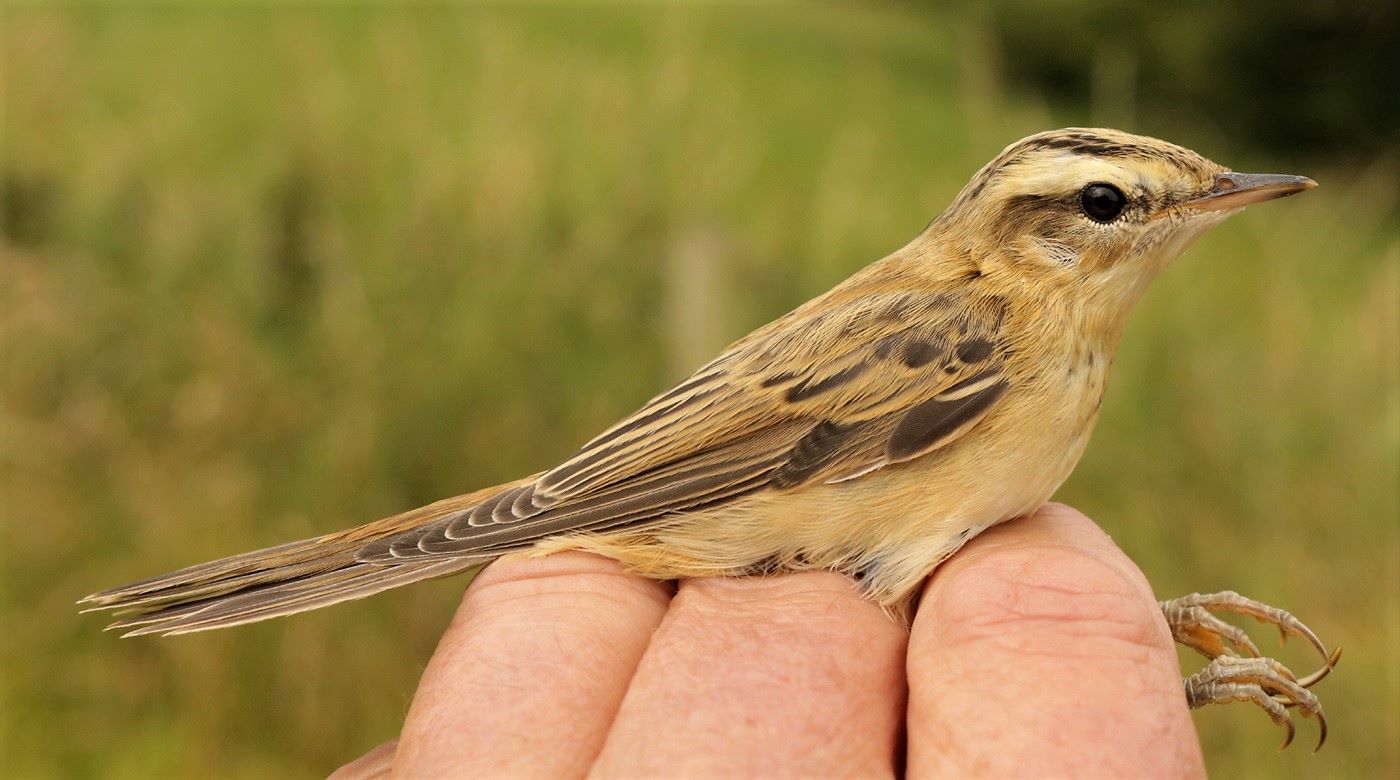
Sedge Warbler

Reed Warbler

Wren

A Wren or “wrigglearse” as ringers fondly name them, has a reputation as a tiny, troublesome beast, one that will wind itself into a mist net several times over or run up an unwary ringer’s open sleeved jacket. Twisty turning fidgeting Wrens are the best learning experience for a trainee ringer in how to handle small birds, lessons they never forget. 

However, Troglodytes troglodytes the cave dweller is an in interesting species and certainly more migratory than many bird watchers realise, hence the reason we catch the species. 

Click on the map below taken from the BTO’s phenomenal online migration atlas.


We’ve hit a Wren sweet spot because today we caught another two Wrens plus 2 Sedge Warbler, 2 Linnet, a Willow Warbler, a Greenfinch and the ultimate rarity, a Song Thrush. 

Song Thrush

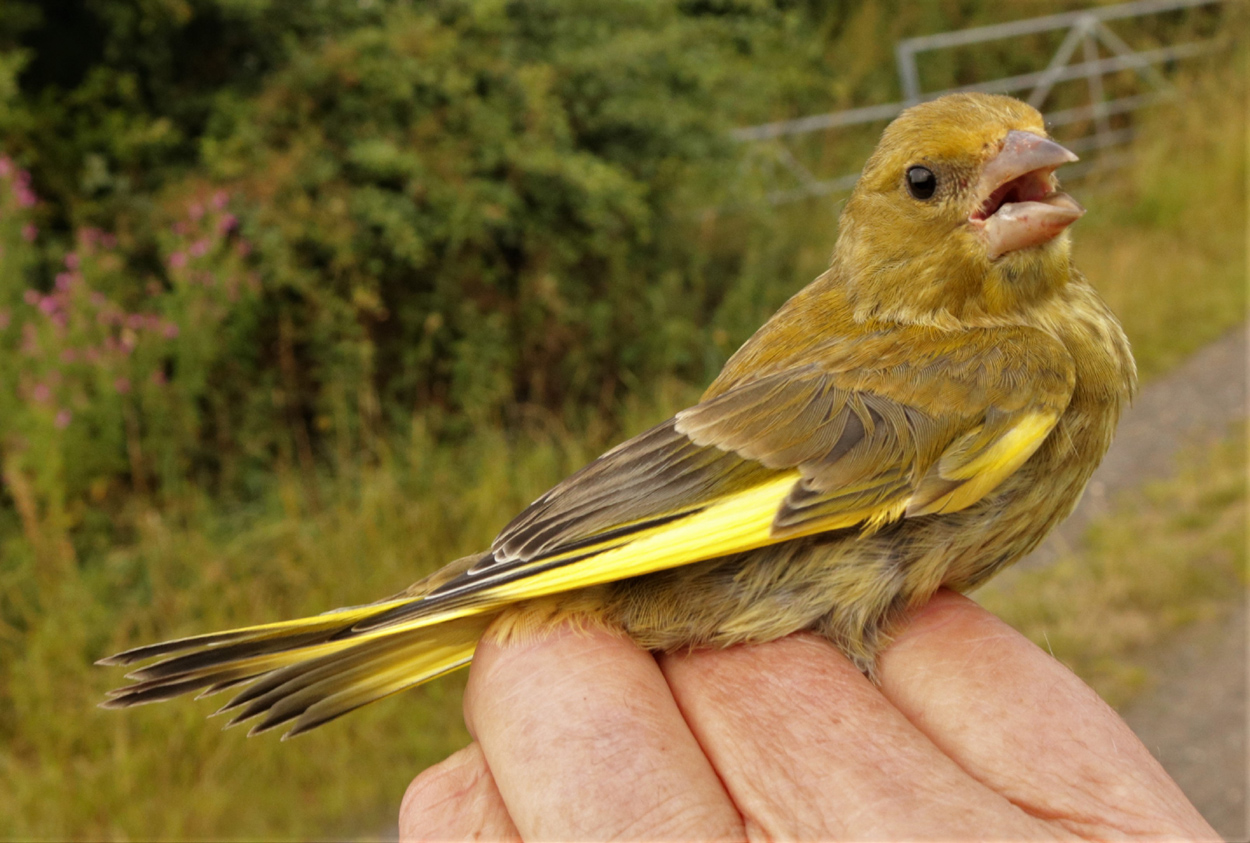
Greenfinch

We packed in early when contractors arrived to turn the cut grass in readiness for silage stage. The noise and disturbance from the huge machines made ringing almost impossible. 

On The Farm

We saw our first autumn Marsh Harrier when a brown juvenile followed the species’ usual route north to south and then disappeared into the distance. 

Marsh Harrier

Also, 2 Little Egret, 1 Kestrel, 60+ Linnet, 40 Lapwing, 30 Curlew, 300 Starling, 1 Great-spotted Woodpecker, 4 Pied Wagtails. 

I was home early so clicked the kettle on and dropped a tea bag into a favourite mug. Life is sweet when there’s nothing to worry about. 

There’s more news, views and photos soon from Another Bird Blog. 


Tuesday, July 19, 2022

Cool, Calm and Collected

Visits to the Sand Martin colony must coincide with zero or gentle winds from the east or south east. Anything else is a no-no when a billowing mist net becomes visible to keen eyed Sand Martins able to pick out an insect from many yards away and then unerringly catch the insect in flight. Our visits must also be in the cool of early morning and before the sun travels west and makes a mist net visible. 

Our third visit of the season and a perfect forecast made us pencil in Tuesday. I met Andy at 0615 to a temperature of 20°, pretty normal for a real British summer rather than the wet and windy ones of recent years. 

Two earlier visits on 4 June and then 30 June saw 119 Sand Martins caught-103 adults and 16 juveniles of the year. We still await details of one of the adults caught on 4 June that bore “Paris Museum” 8911708. 

Before today
 
It’s never easy to come up with a Sand Martin count when so many are in the air, a good number feeding over the nearby water and others toing and froing at the nest tunnels where poking out heads add to the counting difficulties. Our best guesstimate was 180/200 individuals throughout two hours of watching while working at ringing. 

The count was probably fairly accurate with a catch of 65 Sand Martins being a healthy proportion of those around. The 65 comprised 37 juveniles of the year, 17 new adults and 11 adult recaptures, the eleven recaptures all from 2021 or 2022. 

Today’s figures, especially of juveniles, suggest that the Sand Martins here are having a pretty good year following a couple of poor years caused by wet summers, failed broods and the birds’ early departure for Africa. 

Sand Martin

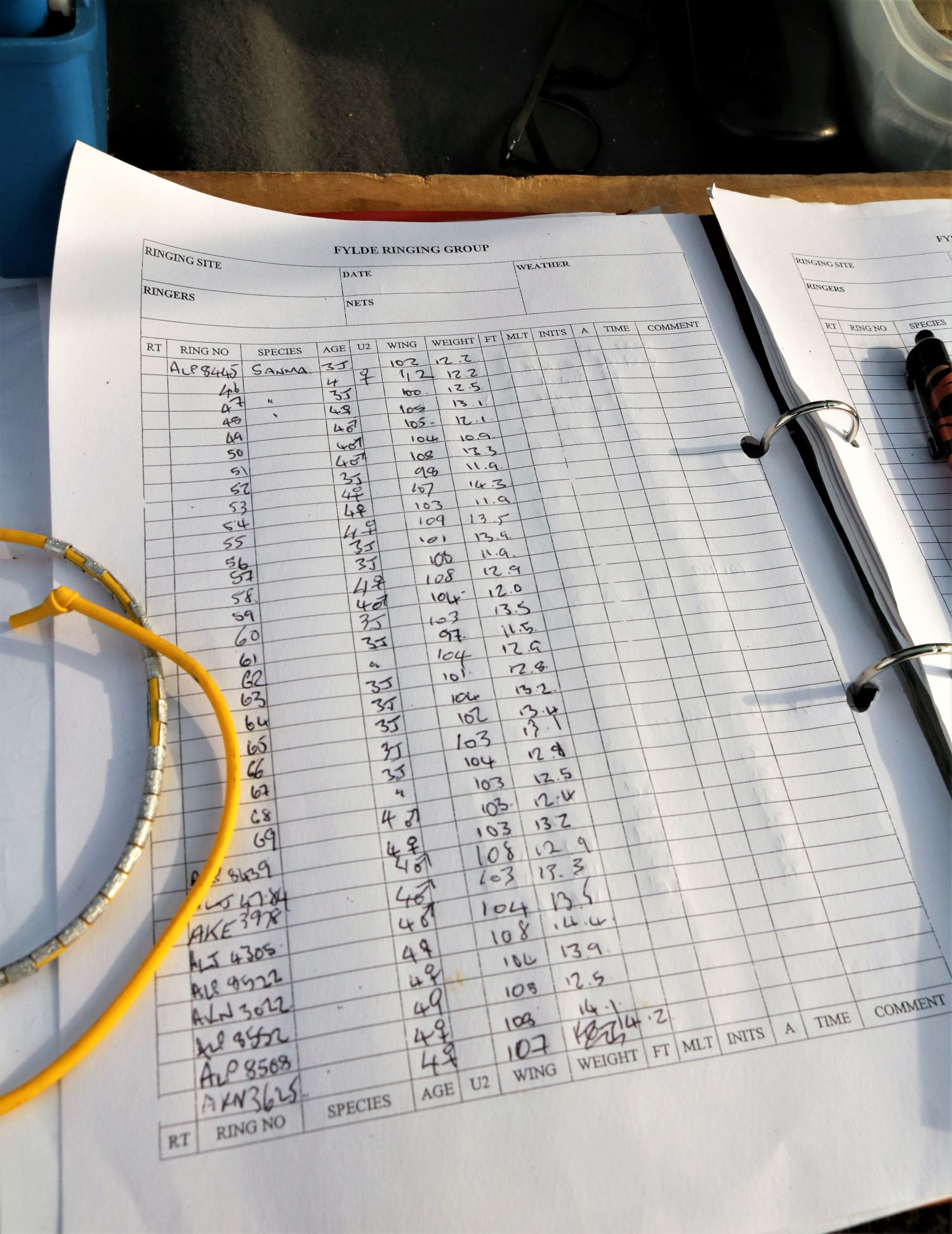
Field Sheet 19 July
 
Sand Martin - juvenile/first summer
 
As an afterthought, here in the UK the two day heatwave green hysteria doom and gloom is out of control. It has become comical and ridiculous by confusing climate with patterns of meteorological conditions that have been with us for the last 15 billion years. 

In the 14th and 15th centuries ‘unnatural climatic phenomena’ were often blamed on ‘a great conspiracy of witches’. During the Little Ice Age in particular, when crops failed in many parts of Europe, there was a frenzy of witch-hunting. Some in society held witches directly responsible for the high frequency of climatic anomalies. 

This sounds all too familiar, like current attempts to pin the blame for weird weather of any sort on today’s witches - coal-mining, cows or motorists. 

Everyone needs to calm down and cool off. We’re safer from weather than we have ever been. It’s the ever increasing numbers of “experts” we should be afraid of. 

Other birds this morning comprised 1 Swallow, 4 Common Tern, 2 Grey Heron, 2 Oystercatcher, 2 Pied Wagtail 

I worked hard this morning doing real Citizen Science. Now it’s sunny and warm. I’m off to sit in the garden with an ice-cream and dream of holidays in Hot and Sunny Skiathos - nine weeks and counting. 

Linking today to Eileen's Saturday and Anni in Texas.

Saturday, July 16, 2022

Minor Movement

Monday at Pilling proved fairly unproductive with yet another catch that barely reached double figures. There was a lack of warblers but a noticeable increase in the flocking behaviour of Linnets. It appears that Linnets have done OK, but for warblers the season has been less productive with post breeding dispersal*yet to kick-off. 

Eleven birds caught - 4 Linnet, 2 Robin, 2 Reed Warbler, 2 Blackbird, 1 Sedge Warbler. 

Adult male Linnets quickly lose their bright red colours and in a few weeks will look completely different after their post-breeding moult. 

Linnet

The two Reed Warblers were recaptures from 19 May 2022 and from August 2021; quite remarkably for mid-July of any years past it meant we had yet to catch a juvenile of the year. 

Reed Warbler
 
Post breeding dispersal. When juvenile birds from the last brood have successfully fledged they are no longer dependent upon their parents for feeding and training and it is common for both adults and juveniles to disperse. They are no longer tied down to the nest site when the rearing of young is over. Adults don’t need to defend their territory anymore and begin to wander further afield in search of food while youngsters head off to discover the big wide world away from their birth place. 

The week continued warm but windy from the north and it was Saturday before any morning looked suitable for another go so I met Will at 0615. The forecast of 5mph proved partly accurate as the wind increased to 10 and then 15 mph with full cloud cover by 10 o’clock and no sign of the overhyped "heatwave". 

We hit a morning of minor dispersal with a handful of warblers newly arrived from elsewhere and definitely not from our site. 

Ten birds caught - 2 Chiffchaff, 2 Sedge Warbler, 1 Willow Warbler, 1 Lesser Whitethroat, 1 Blackcap, 1 Goldfinch, 1 Linnet and 1 Great Tit. Once again, no new Reed Warblers in our catch report although a few adults still sing away. It could be that all the nests of June and July have failed. 

The Lesser Whitethroat was an adult in partial moult, the rest of the warblers being birds of the year. 

Lesser Whitethroat

Sedge Warbler

Goldfinch
 
Chiffchaff
 
Willow Warbler
 
Blackcap

The ever increasing breeze put paid to plans of catching Linnets when the net became visible to the ever wary finches. Throughout the morning we estimated 50/70 Linnets visiting the area but only one caught. 

Other birding entertainment was provided by a pair of juvenile Peregrines twice hunting a pack of Starlings. It was the rush of sound from the wings of tightly packed Starlings that alerted us to the pursuing raptors presence. 

Others - 1 Kestrel, 1 Raven, 4 Swallow, 2 Swift, 2 Little Egret, 1 Grey Heron. 

Linking this weekend to Eileen's Blogspot and Anni in Texas.


Related Posts with Thumbnails