Friday, April 8, 2022

An Improving Picture

The temperature readout showed -1°C and warned of “possible icy roads”. It was 0530 as the wipers scraped across the icy windscreen. I pressed the heated seat buttons, one for me and one for the jacket draped over the seat. I was driving to meet up with Andy and into the hills of Oakenclough where it’s always two or three degrees colder than the Fylde coast. 

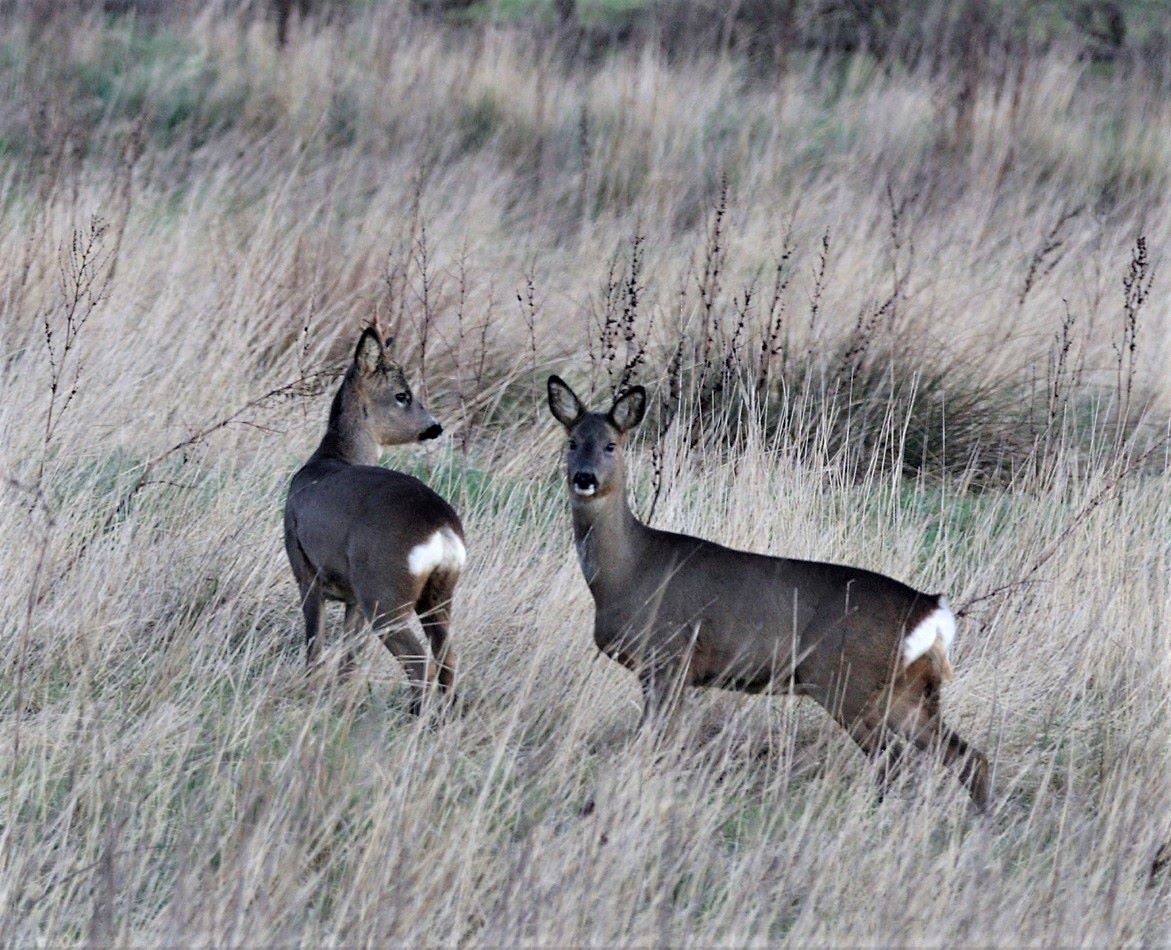
Over Rawcliffe Moss the car lit up two Roe Deer frozen in the approaching main beam so I slowed and turned off the lights so as to let them walk across the fields towards the rising sun. It’s best not to panic wild deer into a mad dash, especially if there are fences nearby. 
 
Roe Deer

As ever, and after a couple of poor catches out Pilling way we hoped that things could only get better, despite talk of continued cold weather in Spain, Portugal, and France, countries through which our migrant birds must pass before reaching the UK. 

We caught migrant and newly arrived Chiffchaff and Willow Warbler in the first hour but then faltered through until 1030 without catching anything too exciting in the way of species or numbers. 

Goldfinch, Lesser Redpoll and Coal Tit were caught at feeding points while Coal Tits are something of a local speciality because of the proximity of a stretch of conifers. 

15 birds of 9 species caught - 3 Great Tit, 2 Lesser Redpoll, 2 Goldfinch, 2 Robin, 2 Coal Tit, 1 Wren, 1 Dunnock, 1 Willow Warbler, 1 Chiffchaff. 
 
Goldfinch

Lesser Redpoll
 
Dunnock
 
Willow Warbler

Lesser Redpoll

Coal Tit

Other species seen – 2 Blackbird, 2 Buzzard, 1 Great-spotted Woodpecker, 2 Mistle Thrush, 2 Pied Wagtail, 2 Brown Hare. 
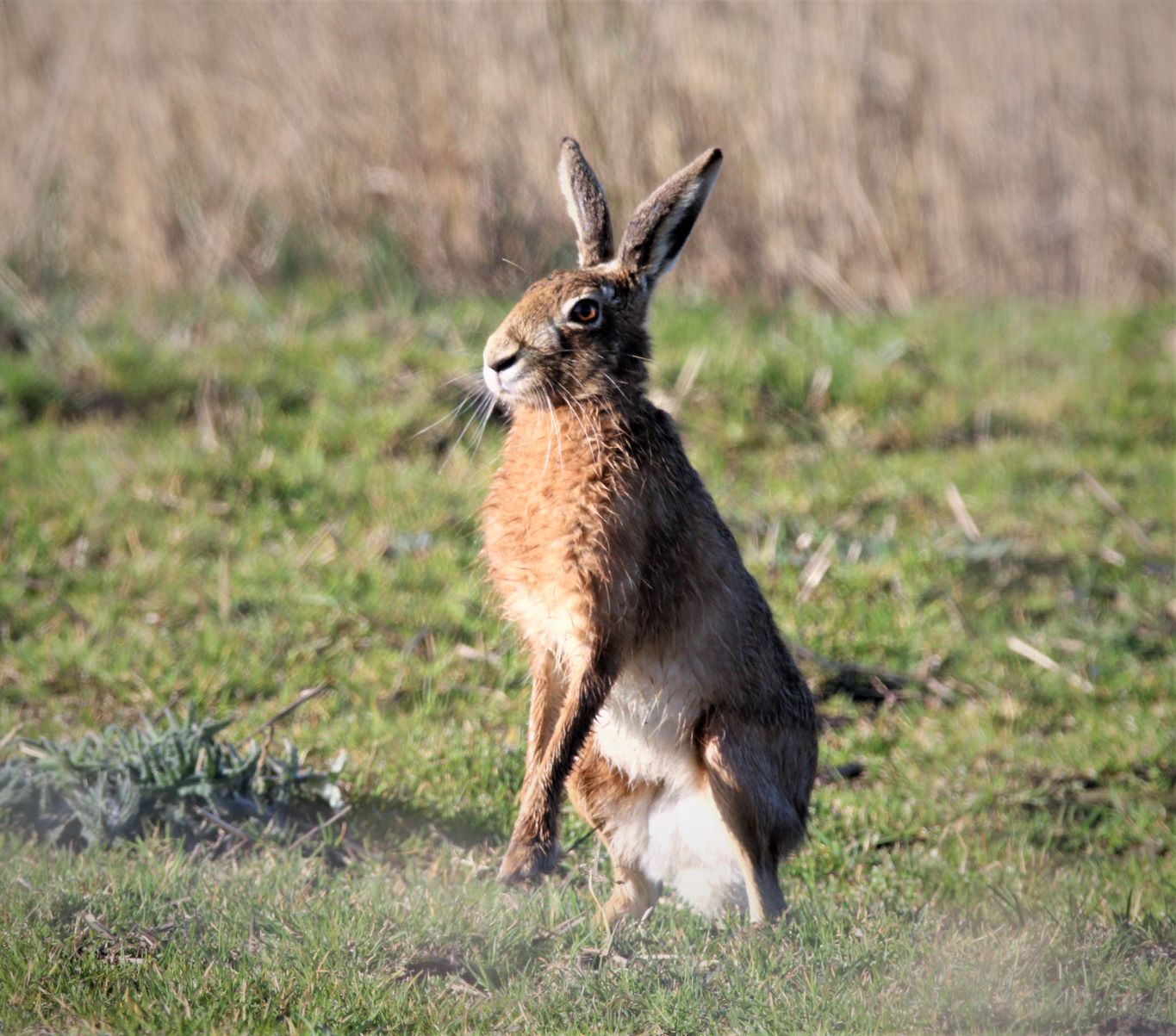
Brown Hare

Pied Wagtail

Linking this weekend to Eileen's Saturday Blogspot and Anni in Texas.

Back soon. Don't go away.


Wednesday, April 6, 2022

Redpoll News

After the promising warmth of late March the first week of April saw a plunge in temperatures, cold northerly winds and the return of rain. The week has been pretty miserable with no opportunity for ringing and little in the way of birding news here on the blog. 

In absence of anything more, I’m posting news of a couple of recently notified Lesser Redpoll recoveries from birds previously ringed at our site at Oakenclough, Near Garstang. The second one reinforces the cold weather effects of early April.   

Lesser Redpoll ALJ4397 was first caught on 12 August 2020 when it could reliably be aged as a bird born in that same summer. In August 2020 it was just a few months old, without any obvious male or female plumage characteristics, so was databased as a “juvenile/first summer”. 

Lesser Redpoll

Lesser Redpoll - Oakenclough to Woolston Eyes

The same individual was recaptured by Merseyside Ringing Group on 13 March 2022 at Woolston Eyes, Warrington, 577 days after the first capture. By now and after a period of 577 days of plumage changes the Merseysiders were able to see that ALJ4397 has become an adult female. 

Woolston Eyes, Merseyside

It seems likely that on both occasions ALJ4397 was caught in the act of migrating, on 12 August 2020, heading south and on 13 March 2022 heading north, both dates suggestive of a Scottish origin. 

+++++++++++++++++++++++++++++++++ 

The second redpoll, one from this very same week of cold weather, Lesser Redpoll AKE3862, another first year individual of indeterminate sex was captured at Oakenclough on 13 November 2019. 

Lesser Redpoll

This redpoll was found dead on 3 April 2022 at Langholm, Dumfries and Galloway, Scotland during a spell of very cold weather. 

On the information report, the finder remarked that AKE3862 was “Freshly dead - within about a week. Poor condition indicating cold weather. Temperature at night around freezing for the past four nights”.  

872 days had passed since the original capture with nothing in between to indicate where AKE3682 had been in those interim seasons or during migration times. 

Lesser Redpoll - Oakenclough to Langholm, Dumfries and Galloway

Langholm, Dumfries and Galloway, Scotland

As in the first example above, but now in a more obvious way, it seems that AKE3682 was a bird of Scottish origin heading south on 13 November 2019 and then on 3 April either arriving at its migration destination in Scotland or about to continue to a more northerly journey's end.

+++++++++++++++++++++++++++++++++ 

The weather is looking more promising for Saturday now. Fingers crossed for more news, views  and pictures to entertain regular blog followers.


Saturday, March 26, 2022

Staying Grounded

Saturday 26 March. There was a cold start at 0600. The temperature gauge displayed 2°C as I erected nets alone while musing over what the next four or five hours might bring. 

During the week bird news from Merseyside, North Morecambe Bay and North Wales confirmed my observations of the early week - low-key migration with small arrivals of Chiffchaffs, Lesser Redpolls, Goldcrests and Wheatears, together with unusually low numbers of Meadow Pipits in the run of clear-cold mornings. 

In North Wales there was an early Willow Warbler on Thursday 24 March together with nine Black Redstarts! I was expecting most of the above but definitely not a Black Redstart, although it was almost 12 months ago to the day of April 1st 2021 that I unexpectedly saw a Common Redstart perched at the gateposts. 

Common Redstart

By 0630 I was up and running with a cup of steaming coffee, the car ticking over and the heater turned to “Hi”. 

This site at Pilling is certainly good for Reed Buntings, already the most ringed bird here for 2022 with another three on the books today. 

Reed Bunting

Reed Bunting

In the furthest mist net lay yet another Brambling, one that at first glance looked identical to the Brambling caught on Thursday. When I turned the bird over to begin extracting there was no ring on either leg and I could see that this was also a second year female, marginally paler than the one of Thursday. 

Unlike us in the grey winter of Northern England the Bramblings may have faded in their winter sun destinations of France, Iberia or The Cornish Riviera. 

Brambling

Brambling

From here on the west coast Bramblings have a long journey yet before they reach their eventual destinations of Scandinavia and further east, into that presently troubled part of Northern Europe. Bramblings breed in coniferous and birch woodlands in much of Scandinavia, a large part of Russia, and northern Kazakhstan and Mongolia. 

Brambling Range in Europe
 
I gradually shed layers of clothes as the sun rose higher and grew increasingly warm. Unfortunately the clear blue skies and zero wind probably helped birds to move off site very quickly. A couple of Lesser Redpolls, 2 Pied Wagtails, Blackbirds and a singing Chiffchaff all evaded the nets and I was left to birdwatch rather than ring birds. 

Chiffchaff
 
There were lots of “pinkies”, Pink-footed Geese, around this morning, with perhaps an influx of those that wintered in Norfolk and South Lancashire, birds now ready to set off for Iceland. There seemed to be many hundreds, even thousands, over 3,000 of them when they panicked from their feeding in the Cockerham meadows when the regular aircraft climbed off from Black Knights Parachute Centre loaded with thrill seekers. 

Pink-footed Geese
 
For adrenalin junkies there’s the opportunity to throw your body out of a light aeroplane for as little as £199 with a “One Jump Taster”.  With luck you will land in Cockerham and not in Morecambe Bay.

Black Knights Parachute Centre - Cockerham Marsh
  
I think I will give that a miss, stick to solid ground and watch from below rather than have the ground rush up to meet me. 

Other birds seen today – 3 Little Egret, 2 Skylark, 1 Buzzard, 8 Linnet, 1 Lesser Redpoll, 2 Meadow Pipit. 

Andy is back from Egypt this weekend, keen to show off his sun tan and eager to get out ringing again, if slightly miffed to miss two Bramblings. Let’s hope bird numbers improve soon for his ringing fix. 

Linking this weekend to Eileen's Saturday Blog and Anni In Texas.

Thursday, March 24, 2022

Quality Not Quantity

There goes that old chorus again, the one that ringers use when numbers are low but there are a few goodies to shout about. 

Until today the week was a little breezy for the Pilling site where even a breath of wind blowing through the bare hawthorns wafted a mist net around and made it visible. This morning was slightly better with zero wind and by now, after a couple of sunny days, green leaves and blossom in place of bare branches. 

Although by the end of March there are migrant birds to see the main bulk of migration of insect eating passerines is still three, four and more weeks away. I hoped to catch a few Meadow Pipits, a species that migrates north in good numbers in March but there seemed to be few around and I thought maybe they were high up in the cloudless sky with no reason to landfall. 

In fact visible migration was rather poor with small numbers of Lesser Redpolls and Reed Buntings being the most numerous. Just 9 birds caught – 5 Reed Bunting, 1 Goldcrest, 1 Blue Tit, 1 Lesser Redpoll and 1 Brambling. 

The Brambling, the second one caught here this spring, was a subtle looking second year female without the black and bright orange shades of the male caught here a few weeks ago. 
 
Brambling
 
The redpoll likewise proved to be a second year female. A second Lesser Redpoll escaped the net before I could reach it when I was forced to deal with a Mallard crashing about in another mist net. The nets are not designed to cope with wayward Mallards. Fortunately the duck found a way out without damaging the fairly new £90 net. 

Lesser Redpoll

Lesser Redpoll
 
Reed Bunting
  
Goldcrest
 
Other birds seen and heard - 20 Linnet, 6 Lesser Redpoll, 3 Blackbird, 1 Kestrel and 1 Snipe. Wintering birds comprised over 300 Pink-footed Geese on nearby meadows where their stay will soon be ended by a flight to breeding grounds in Iceland. 

Kestrel
 
I disturbed the Snipe when crossing a still soggy field on my way to the seed plot and where over the winter we had caught Linnets. An escaping Snipe or two became a regular feature of most days when splashing across to the seed plot. The Linnets are no longer with us in any numbers with so many gone north, hopefully to the top of Scotland where with luck one or two will be recaptured by Scottish colleagues. 

Snipe

Back soon. Maybe even Saturday if these winds stay down and high pressure stays around.

Linking this weekend to Anni's Blog and Eileen's Saturday.


Saturday, March 19, 2022

Gulls But No Shortie

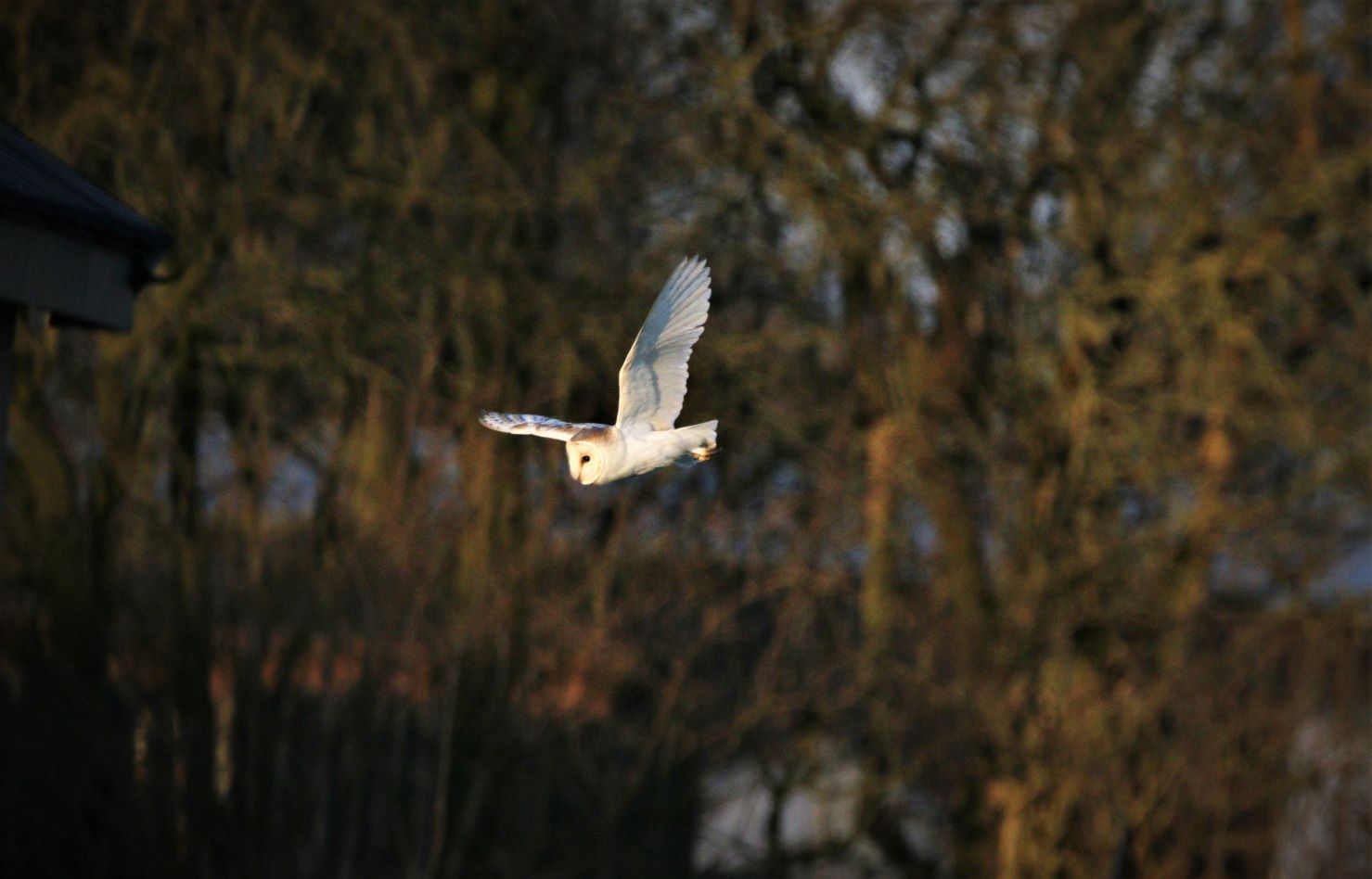
There wasn’t much light when on Saturday morning I set off in the direction of Pilling. When I reeled off a bundle of shots at a hunting Barn Owl, the resulting pictures were badly under. I checked the settings were correct, and they were, so I think the camera and lens had been out of action for so long in our dreary winter the two had forgotten how to interact together. I rescued a couple of frames that are still pretty poor. 

Barn Owl

Barn Owl
 
The light was slightly better when the Roe Deer appeared and where speed on the button was essential before the animals ran into the distance. Our local deer are very shy and wild so don’t hang around for portraits. 

 
Roe Deer

It had been ages since my last visit to Conder Green and where today the usual species were on display. Winter work by RSPB to build up the islands has led to a massive increase in the number of Black-headed Gulls looking to begin their breeding cycle any day. Summery Black-headed Gulls are handsome creatures but their large colonies are both noisy and messy. 

Black-headed Gull

Group names for a collection of Black-headed Gulls include a flotilla, a screech, and a squabble. It will be interesting to watch the interplay between so many gulls and the annually returning Common Terns in a month or so. Although both species can and do nest in close proximity the terns may have a shock to see so many gulls on their islands. 
 
Black-headed Gulls
 
The Black-headed Gull is the most widely distributed seabird breeding in the UK, with similar numbers breeding inland as on the coast. The majority of the breeding population are resident throughout the year, with numbers being greatly bolstered during the winter months by birds from Northern and Eastern Europe, especially in the east and southeast of England. Black-headed Gulls breed throughout the middle latitudes of the Palaearctic and have recently formed a breeding outpost in North Eastern North America. 

Just recently I heard of nest robbers who are looking forward to the Black-headed Gull nesting season. Read the link below to see why a Black-headed Gull egg is a sought after delicacy that can cost £8 for just one - maybe even in normally law abiding Conder Green?

 
On show today with 350 Black-headed Gull - 380 Black-tailed Godwit, 44 Oystercatcher, 41 Redshank, 32 Teal, 22 Tufted Duck, 1 Snipe, 1 Curlew, 1 Little Egret, 1 Barn Owl, 1 Chiffchaff. The Barn Owl here at Conder Green hunted towards the back of the pools and islands and didn’t venture close to the road. 

There was no sign of the recent Short-eared Owl, despite a sans-bins togger kindly informing me that the far off white owl was a “shortie”. 

Venturing towards Cockersands I saw a number of migrant passerines that included several each of Reed Bunting, Meadow Pipit, Pied Wagtail and Skylark, together with a single Wheatear (Cockersands). At Cockersands too, a Merlin drifted along the shore line, no doubt hoping to surprise a pipit or two. 

Reed Bunting

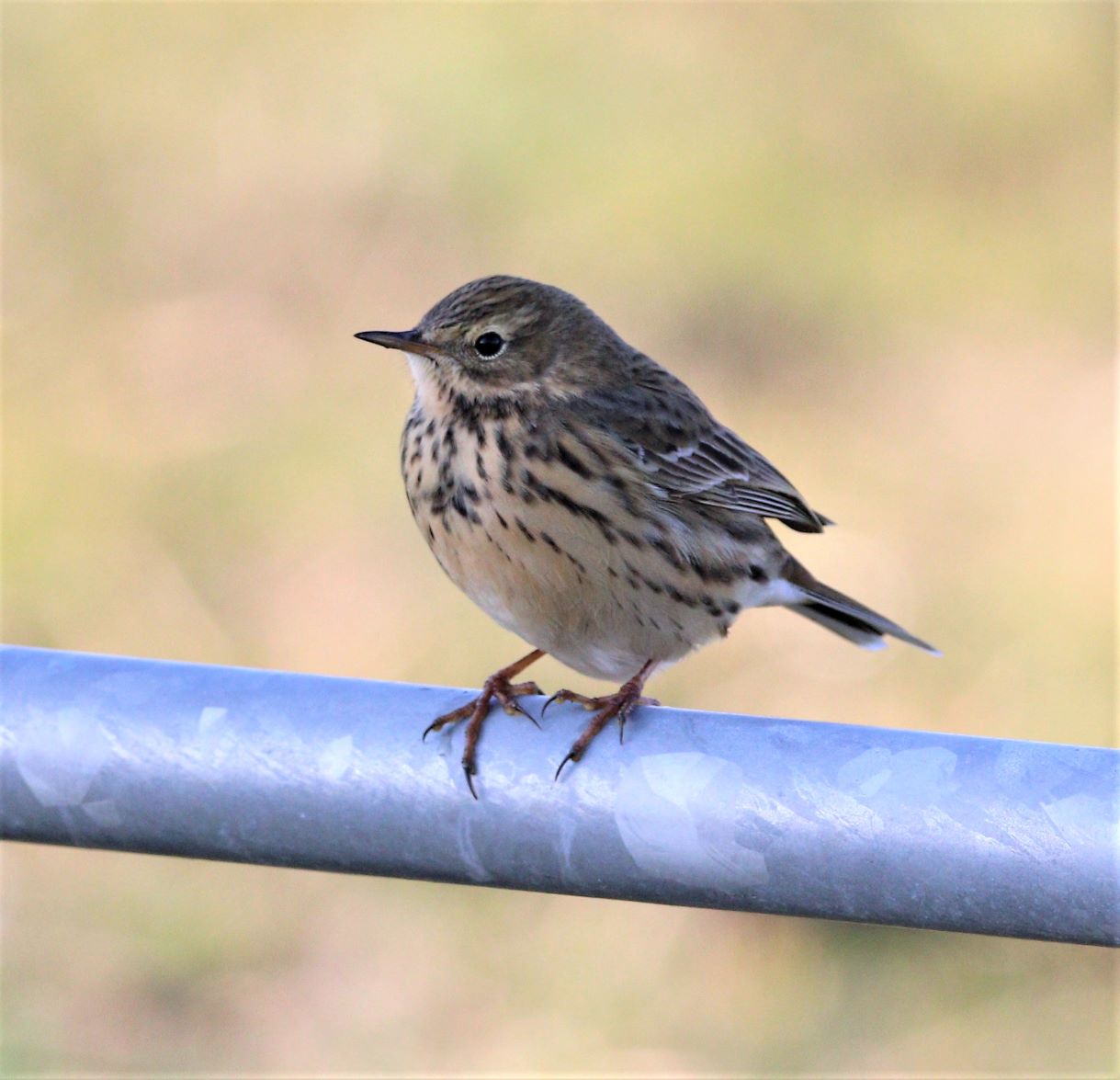
Meadow Pipit

Pied Wagtail

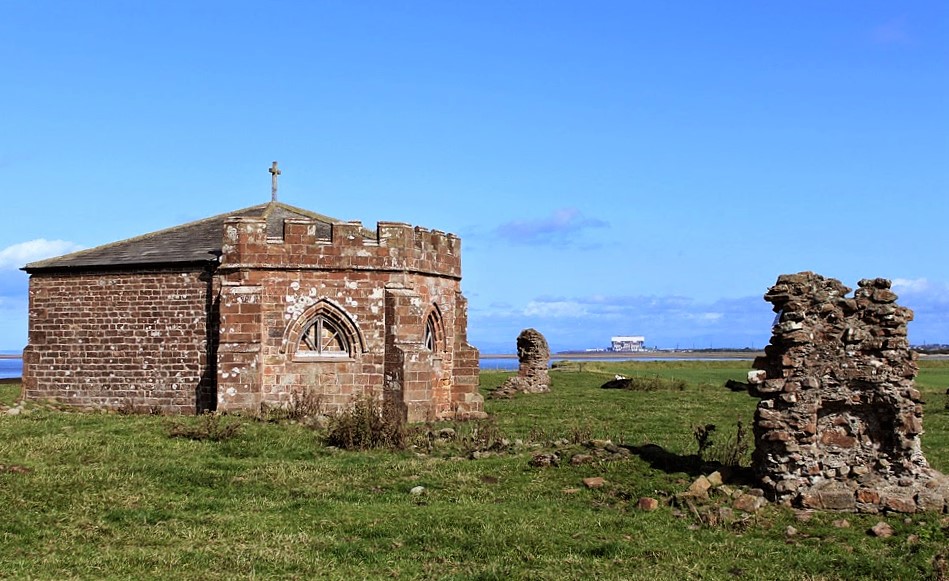
On the usual fields Behind Cockersand Abbey the Lapwings were in the early stages of nesting, busily chasing off their ever present foes, the Carrion Crows, another set of villains on their nest robbing adventures. 

Cockersands Abbey

Lapwing

At last and after a brutally wet and windy winter Spring may be around the corner. Next week is forecast for a dry and warming week.

Log in soon for more news, views and better photos.


Related Posts with Thumbnails