Showing posts with label Little Egret. Show all posts

Tuesday, June 16, 2026

Καλές μέρες. Part One.

Yes. It has been a while.

May 4th 2026 at 0200 hours. Tiny taxi skidded across the IPhone screen, over the bridge, through the village, heading our way. Five minutes later headlight beams turned the corner to illuminate our luggage waiting patiently on the darkened driveway. Howard loaded our gear, spun the car around and headed off the way he came and then towards the M55. Destination Manchester Airport and flight Jet2 LS1729 to Greece. 

Taxi drivers meet many varied people and it's no secret that they like to chat, sharing news and views on life. Most have a good handle on the pulse of Joe Public and are not shy to share their own opinions. When I mentioned my dislike of football, my fear of the coming World Cup but my love of cricket Howard changed tack and moved to the state of Britain, a subject close to the heart of 99% of his passengers of recent months all of whom have apparently suffered from symptoms of cold rage. By Terminal 2 Howard and I had solved all the world's problems and agreed the right way forward would be to not pay a TV licence and to never, ever buy a newspaper. The lively discussion allowed Sue to grab a a little snooze.

Howard disembarked us at the Jet2 end of Terminal 2 where a phalanx of friendly red-tailored youngsters greeted and sorted us in double quick time. It’s no wonder we dumped TUI years ago to now find that Jet2 overall service is superior in most respects; Germanic efficiency is not as it was whereby whole Facebook Groups are devoted to the subject of customer complaints and TUI’s misfortunes. 

Jet2 

Reading flight boards is an exercise and education in the geography of deciphering letter codes of sometimes distant, often nearby destinations. We noted that EGPD is not an airport in Egypt but Aberdeen Airport Scotland and that KACT, Waco in Texas USA was not for us. Lower down the unending display we found it – the mystery that JSI = Skiathos with the message “Wait in Lounge”. So we did just that while taking our respective morning pills with a cup of very expensive lukewarm coffee. 

Manchester Airport May 2026

As we flew east to the warmth and sun of Greece The Alps below were blanketed in snow, a seemingly icy wilderness where people spend holidays falling over and breaking limbs. It’s all good harmless fun but not for us. 

The plane manoeuvred lower as it passed over Northern Thessaloniki towards the tiny island of Skiathos marooned in the Aegean Sea some 250 miles north of Athens. Arriving from an easterly direction with the sound of landing gear slowly unwinding we passed close to the island of Skopelos on our right and Skiathos Town almost directly below. Plane spotters would be waiting for us. The hobby is very similar to Birding 2026 but a little more dangerous when stood behind an Airbus about to take off.

Plane Spotters Skiathos

Skiathos, Greece

Lumps in the throat formed as we thumped onto unyielding tarmac and the air brakes kicked in with a vengeance. We were back to beloved Skiathos for 19 days and 19 nights. 

Without the nonsense of EES we passed quickly through airport necessities. A smile, a “kalispera”,a stamp in a passport, grab the waiting cases and off we trotted into the waiting sunshine. In their infinite wisdom Skiathos had weeks ago decided that during busy arrivals and departure times they would dispense with rules from the Brussels commissariat and instead use a common sense approach in allowing innocent travellers and waiting businesses to enjoy their times and Euros together. 

Maria was waiting with the Jimny, a newish vehicle in a khaki colour that Magda had earmarked for us when she discovered my own purchase of a JB74 in late 2025. While no colour match for my metallic blue Jimny, the khaki shade fitted the bill to blend into the rugged Skiathos landscape. During our stay we would meet more JB74s, a cool car, blue or khaki.

Jimny x 2

Jimny UK

Jimny loaded up we hit the road with a dash and then a splash of water, orange juice, fresh strawberries, butter, Greek yoghurt, a bottle of ouzo and other essentials from Slaventis supermarket along the Ring Road. Slaventis has real live people serving at real food counters. Fish, cheeses, fresh meat, fruit & veg that can be picked and chosen from display by a customer to their own requirements Hand it to a staff member to weigh and ticket followed by a cheery “efcharistó” from both is a civilised way of shopping. Not your average Tesco experience. 

Slaventis Skiathos

Slaventis Skiathos

Slaventis Skiathos

Slaventis Skiathos

Just twenty minutes later and after negotiating Skiathos’ single roundabout we took in coast road views to eventually drive into The Almira car park where Anna waited for us at the hotel entrance with hugs and kisses while asking why we were late. 

Aghia Paraskevi. Next stop Troulos
 
When Anna clocked the bulging supermarket bags she knew the score. Within minutes we had the best room ever in the hotel. A private bungalow room aptly numbered 101 with grassy space for two sunbeds, table and chairs and probably anything we asked for. There was a view of the hotel grounds, bar and swimming pools, and over the back an unkempt field with Barn Swallows, Red-rumped Swallows, Swifts, a resident Little Egret, Night Heron, Grey Heron. One morning came a couple of late migratory Bee Eaters plus a gang of rather lazy sheep that lived on site. For now! 

Night Heron

Red-rumped Swallow

Little Egret

Almira Hotel

Bee Eaters

Our long-standing friends Anna Mathinou and husband George (Giorgios) Diolettas run the most amazing hotel and attached Restaurant Oregano. The grounds and rooms are immaculately maintained by a superb team of friendly people who appear to love Anna and George as much as we do. 

We remembered when George and Anna adopted the Almira in 2017. The old place, then known as The Beltsios was run-down, neglected, the subject of serious family squabbles and not in demand by discerning tourists. It became something of a dump, in danger of falling apart at the seams. At the time Anna worked at Skiathos Town Hall, George was Bank Manager of the Alpha Bank in Skiathos Town when they quit their jobs at similar times to adopt what they saw as a business opportunity and chance to achieve something extraordinary. 

Anna Mathinou

George Diolettas

Entrepreneurship. It’s a word and a characteristic no longer admired or encouraged in Britain, now ignored in favour of punishing those who look to better their own and the lives of their family, to provide work, employ others and to make a creative, happy society for the good of all. 

No, our useless UK government and politicians can only investigate and introduce ways for us to pay yet more taxes, destroy initiative, success and enterprise and to then waste the money on ill thought schemes that no one wants or ever voted for.

George showed me his PC record, photos of the work that he, his brother and Anna did to bring the hotel back to life. They became painters, plumbers, joiners, builders, electricians and anything they could turn a hand to learn. As the pages of the screen turned, so the transformation followed, proof on record for all to see. The Hotel Almira with The Oregano is now a leading light of the Skiathos holiday and Tourist Trail, admired by locals and holiday makers alike as Anna and George go from strength to strength. 

Here’s a few pictures of the brilliant team at Hotel Almira and the lovely, welcoming hotel created by George and Anna. 

Hotel Almira, Troulos, Skiathos

Hotel Almira, Troulos, Skiathos

Hotel Almira, Troulos, Skiathos

Joanna. Hotel Almira, Troulos, Skiathos

Hotel Almira, Troulos, Skiathos

George and VIP Guest May 2026

"Kalimera" Hotel Almira, Troulos, Skiathos

Oregano Restaurant, Troulos, Skiathos

Oregano Bar & Restaurant, Troulos, Skiathos

Oregano Restaurant, Troulos, Skiathos

Oregano Restaurant, Troulos, Skiathos

You can contact Anna and George direct or book a stay in Skiathos through Jet2. 

Happy Days. Part Two with more views and birds later. Stay tuned.


Sunday, September 8, 2024

Out For The Count

There's is a lot of rain due today following a rather "lively" week. Lively as in  mixed and unpredictable rather than intellectually stimulating, a week of windy days and restricted activities.

So for now I’m stuck in at the computer and able to answer a question posed by a blog reader recently - “How are you at counting pickles in a pickle jar and candy in a candy jar...guess that would make for good practice. How do you get your numbers anyway...had to ask?”. 

I’d never thought that counting pickles in a jar could be similar to counting birds but in actual fact the same principles apply. 

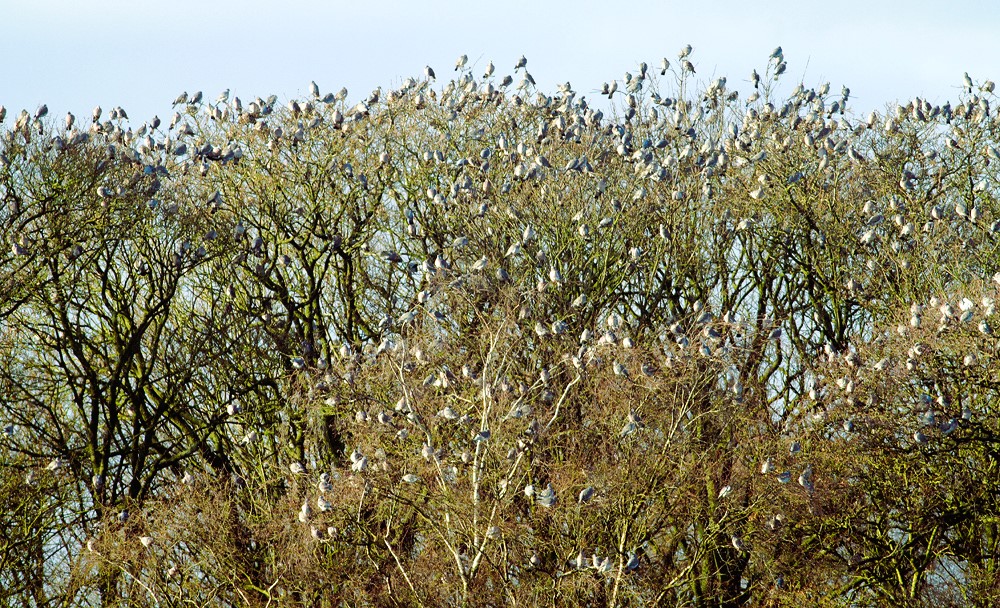
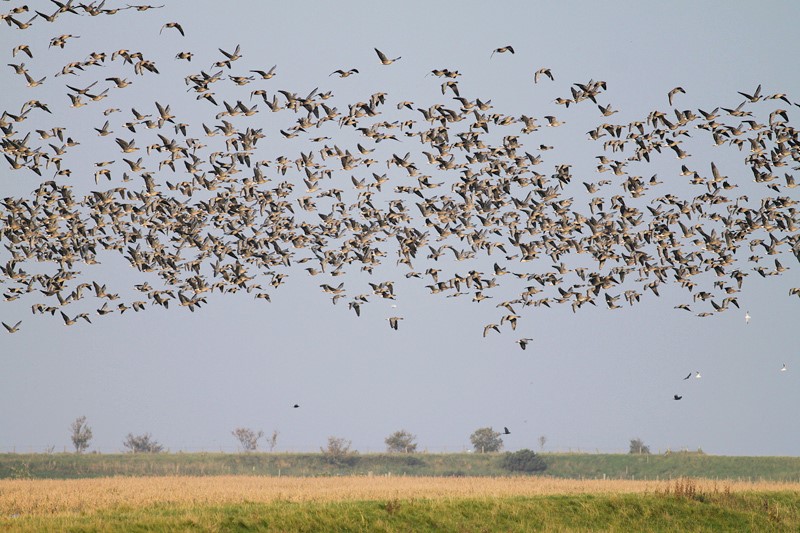
Here is a summary of bird counting techniques methods which I and many other birders use when out in the field. I dotted the text with photographs of groups or flocks of birds for readers’ on-going practice and consideration. 

Many birding projects ask participants to count birds, and most birders I know enjoy keeping a count of the birds they see whenever they are in the field. Counting each individual bird seen can be challenging, but it can also provide valuable information for scientific research. As populations of birds change, mostly downwards, fluctuations in counts at the same locality at the same time of year may indicate shifts in pollution levels, habitat loss, migration timing and more. 

One is simple even if it does fly off as soon as the shutter activates. After that things become more difficult.

Little Egret - One


Woodpigeons - How Many?

Annual projects such as the Breeding Bird Survey, Common Birds Census, Garden Bird Survey, BirdTrack, Wetland Bird Survey or the Ringing Scheme are different types of bird census projects which over several years accumulate a massive amount of data about numbers of birds in different locations. The data would be impossible to gather without the help of every participant. However the more accurate a count is, the more useful the data is for conservation projects and ornithological research. 

There are various ways to count birds depending on the birds present, the size of the flock and how the flock is behaving. Techniques include: 

Individual Counts: When just a few, recognisable birds are present, each individual bird can be easily counted without fear of major miscalculations. This basic one-two-three technique works best when the birds are clearly seen and slow moving so that individual birds will not be counted multiple times.

Grouping: Counting birds in numeric groups is an easy method for totalling small or medium-sized flocks. With practice birders can easily learn to count birds not one by one, but five by five, ten by ten, and with practice, fifty by fifty. This allows for a faster count while still keeping the increments small enough for precise numbers. 

Oystercatcher - 240/260?

Grids or Counting in Blocks: This counting system is most often used with larger, single species flocks where the birds are relatively stationary. The field of view is divided into a grid or block of even sections where the birds in one section are counted as close to individually as possible. Multiplying this count by the number of grids or block sections in the flock can give a reasonable estimate of the total number of birds. 

Whooper Swan - circa 65/70?

Selective Counting: When a large flock of birds has some obvious mixed species, it may be possible to selectively count all the birds easily. First, pinpoint the more unusual birds in the flock and count them individually, then use the grid/block technique on the bulk of the birds. This provides not only a good count of the flock size, but also represents the diversity of the birds present. 

Proportions: When a mixed flock has too many species for selective counting, a good estimate can be made by counting proportions of the species present. Similar to the grid/block technique, only one section of the flock is counted, but each different species is noted individually, and the proportions are used to calculate the total number of birds of each species in the entire flock. This technique is best when a flock is heavily mixed and each species is spread throughout the flock. 

Timing: When a flock is moving quickly, it can be impossible to create a grid/block or to count birds individually, since the movement will obscure other birds and make any estimate less accurate. A timing count can be used by focusing on a fixed point the flock is passing, and counting the number of birds passing that point in a certain period of time, such as a few minutes. Then the entire amount of time it takes for the whole flock to pass is noted, and the count is multiplied by the number of increments in that overall time to gauge its full size. This system can also be employed during times of visible migration or massed flight e.g. Swallows, Meadow Pipits or finches passing overhead or through a fixed point. 

Wigeon - circa 70?

Photographs: A digital photograph can be used for an accurate count if the entire flock can be photographed. The photo is then manipulated on a computer or printed out and individual birds are marked off as they are counted. This is a time-consuming method but can be very precise for a reliable count when high levels of accuracy are necessary. 

Sanderling - 65/70?

Practice is essential to develop and refine bird counting skills. The more frequently someone counts birds, the more comfortable they will be with each count made while knowing the data collected is accurate and therefore more valuable. Other ways to enhance the methods of counting birds include: 

Maintaining a notebook at hand to write down a record of birds counted, particularly when counting over a longer period of time. With notes there is less need to “guesstimate”. 

Allow for density when counting flocks, particularly when using grid or timing techniques. Birds are often less dense on the outer edges of the flock, and if grid sections are not balanced a count can be significantly off. 

Work to be as accurate as possible, but when necessary, choose to underestimate rather than overestimate the numbers of birds seen. This will help correct for any inadvertent errors, such as birds that were counted more than once. 

Counting birds can add a new dimension to birding, by not only keeping track of the numbers of birds seen but also making the birding so much more purposeful and useful for conservation science. 

Remember that counting birds may not be an exact science but it is a highly enjoyable one. 

Pink-footed Geese - +500? 

Meanwhile, and in view of the parlous state of  many bird species, I think that very soon there will be very few birds left for anyone to count.

For those of a certain age. Does the Joni Mitchell song from 1961 ring a warning bell?

Insert the word "birds" in place of "trees"

Don’t it always seem to go

That you don’t know what you’ve got ’till it’s gone?
They paved paradise, put up a parking lot.

They took all the trees
Put 'em in a tree museum
And they charged the people
A dollar and a half just to see 'em 


Please log in to Another Bird Blog soon - I'm counting on it.


Saturday, August 31, 2024

Blog Post

I suddenly realised I had not blogged for ten days or more and mentioned to Floridian friends that I currently lacked inspiration for the task. It’s OK for them living in a 365 day sunshine state where a single nature reserve like Withlacoochee River State Forest consists of nearly 60,000 acres to explore! If there is anywhere here in the UK with a spare 60,000 acres, brown paper envelopes change hands and the said acres disappear under concrete in the blink of an eye. 

Gini who is wise in all things, advised me to “just slap the keyboard until a few words pop onto the screen, call it a “blog post” and her and Wally would supply the enthusiasm.” Here we go then Gini. 

The week began with good numbers of Swallows on the move. On Tuesday, an overcast mizzly morning, we drove to Garstang for food shopping and bacon butty day when it became quickly apparent that Swallows had hit their pathways south. They whizzed back and forth, left to right, feeding like mad but with a certain southerly slant. Four hours later and on the same road back there was hardly a Swallow and by this Saturday morning’s patch visit, none. Autumn had begun in earnest. 
 
Swallow

Most, about 90-95% of those migrating Swallows off to South Africa would be birds of the year, born this summer and now heading off into the unknown with just their DNA and the company of others to guide them. Magical. 

There was no ringing this week. Sidekick Andy was indisposed and mostly windy days meant that camera days came into play. 

The Common Kingfisher is an autumn and winter visitor to this part of coastal Fylde where sheltered ditches and dykes sustain a surprising number of easily missed birds. A flash of disappearing pale blue is often the view that many people experience. I snapped one midweek on a habitual gate post that is located alongside said dykes. 

Kingfisher

Kingfisher

I photographed a Little Egret in a couple of unlikely poses. Maybe it was drying out in the sunshine rather like a Cormorant or simply watching the water and reeds below and hoping for a meal? 

Little Egret

Little Egret

A young Yellow Wagtail quite liked the farmer’s midden, one of a number of wagtails on the move this week.
  
Yellow Wagtail

More than a couple of Marsh Harriers came my way. A once scarce migrant the harrier is now well established in parts North, South, East and West of here and from where its spring and autumn migrations mean it is now regularly spotted. I hear that this year a pair bred in the uplands of the Bowland Hills, an area more famous (or infamous) for the trials and tribulations of the persecuted Hen Harrier. 

The young Marsh Harrier seen here was hunting fields close to 13th Century Cockersands Abbey.

Marsh Harrier

Cockersands Abbey
 
It’s a good spot to see a Marsh Harrier or watch Wheatears using the ancient rocks as look out posts or listen to the wild cry of Curlews, much like the monks of old in around 1200AD. 

Wheatear

Saturday morning saw large numbers of Buzzards kettling as they dispersed south, a not unknown phenomena in the Fylde but made noticeable in recent years by the downturn in our local and somewhat persecuted population of Buzzards. 

The Buzzard is not a species ringed in any great numbers and one that in a dead or dying condition is probably unlikely to be reported, more so if the finder is a person with a mind to harm the species.; therefore we know little about these individuals but it seems likely they originate from less populated parts of Northern England & Scotland and disperse south & west for the approaching winter. 

Buzzard
 
Although Buzzards are known to eat mammals, birds, carrion, even earthworms and large insects when other prey is in short supply, their propensity for taking leverets and game birds released for shooting makes the species unpopular with some communities. 

The week ended badly on Friday as wine o’clock drew close we realised that the Portuguese bottle on the dining table had a cork stopper and our trusty waiter’s friend had gone missing. Panic set in until we found an Italian screw top bottle. We followed on with a quick search on Ebay to find and order a bright yellow replacement friend just in case we require a bottle opener later in the week.  

Waiter's Friend

Sue and I are not fans of most screw tops, metal closures invariably found on cheap wines with meaningless, made-up labels that try to hide the fact that it is bulk wine sloshed around in a rusty container for months on end to be eventually bottled at a Warrington post code adjacent to the Manchester Ship Canal. No thanks. 

Cork has centuries-old tradition behind it, a little like us. 

How did I do Gini?

Back soon if Wally and Gini OK this post.


Wednesday, October 25, 2023

Half Day Wednesday

A 0730 start is as late as it gets now. Next weekend we turn the clocks back an hour and head into winter. At seven-thirty Thursday it was still pretty dark and we hoped to catch a few early morning Redwings. 

We got the nets up in double quick time with the help of headlamps however the Redwings didn’t arrive and we settled for a couple of migrant Blackbirds. In fact the whole morning’s ringing turned out quiet with just 11 birds caught – 3 Blackbird, 4 Linnet, 3 Chaffinch, 1 Goldfinch. 

Chaffinch

Goldfinch

Our four Linnets proved disappointing when the combined count of a number of flocks totalled over 250 finches, a count that included a number of Goldfinches and Greenfinches, the latter not easy to pick out amongst fast flying gangs of small birds. 

All four Linnets showed features of Scottish birds and as usual all new birds, with a slim chance only of capturing a recent Linnet or a Linnet from elsewhere.

"Scottish" Linnet
  
Goldfinch

Linnet

There was a Sparrowhawk in attendance and then brief views of a “ringtail” Hen Harrier over the nearby marsh. 
 
Hen Harrier
 
Female and juvenile Hen Harriers, are known colloquially as “ringtails”, both look very similar, with brown on top, almost checkerboard brown and beige underwings, a white rump and a bearded tail. However, females are larger than males at 400-600g, compared to 300-400g. They're smaller than buzzards, but larger than crows. 

Storm Babet made little impression here on the west coast, a few windy days and nights but we are rather accustomed to that scenario and take it in our stride.

Keep an eye on the weather folks. And then come back here to Another Bird Blog for the latest news, views and photographs.

Linking today to Eileen;s Saturday blog.


Related Posts with Thumbnails